What Happens to Your Metabolism After GLP-1?
Stopping the medication doesn't have to mean starting over.
Written by BeyondGLP Editorial Team · Medically reviewed by Dr. Gabriel, MD
Key Takeaways
- Stopping a GLP-1 medication is associated with substantial weight regain — roughly two-thirds of lost weight within a year in the largest trial to study this directly.
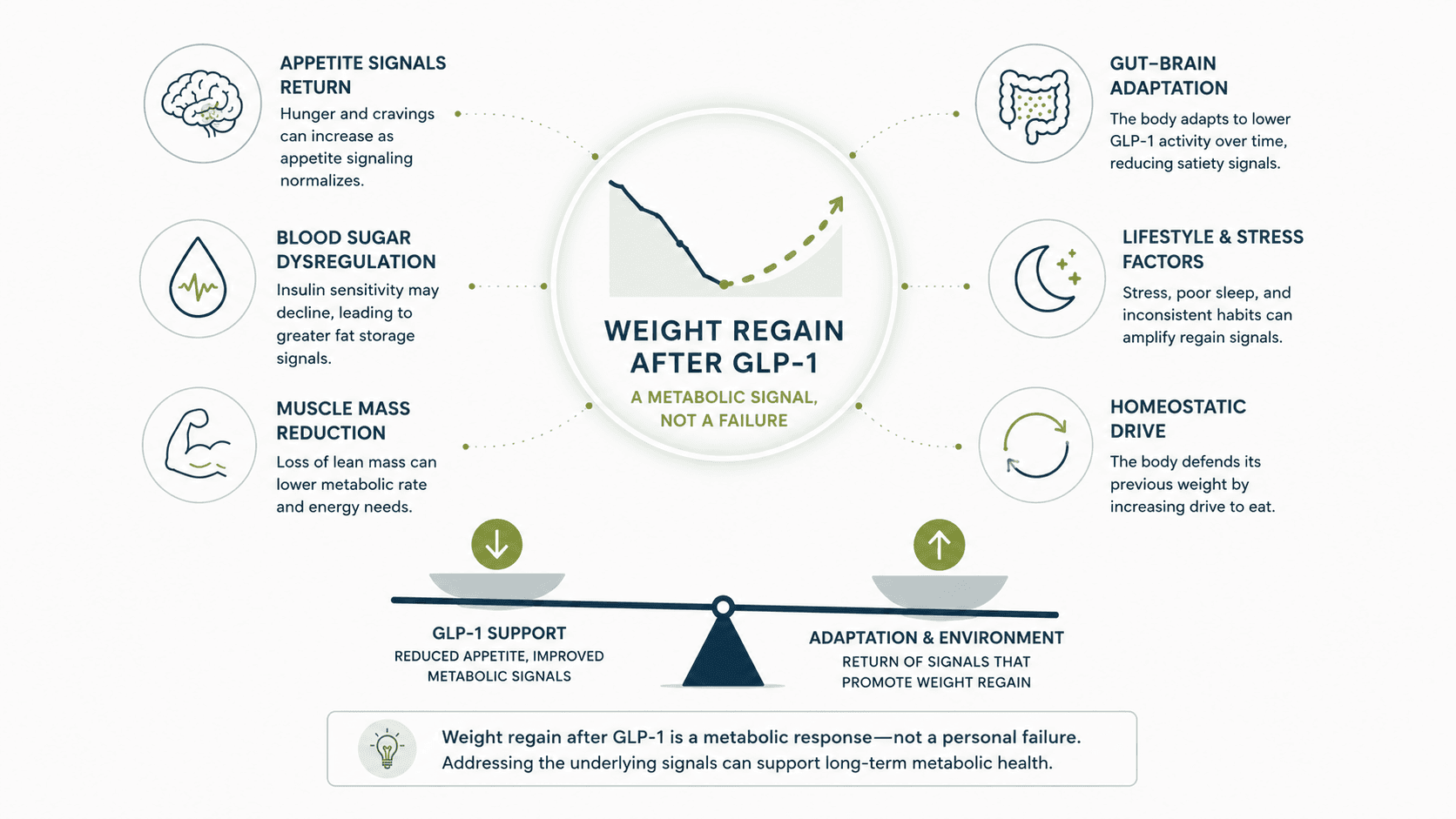
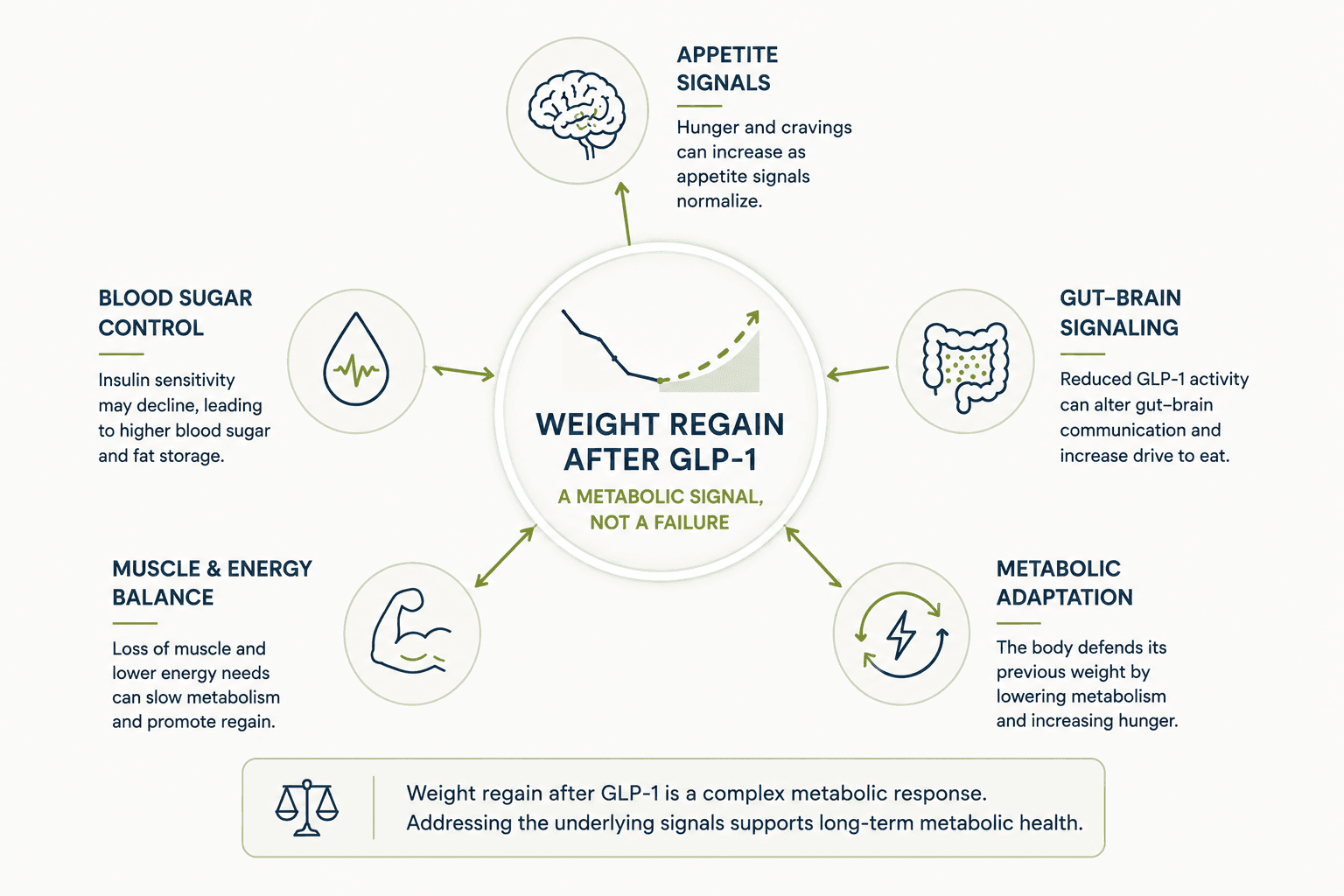
- This regain reflects real, predictable biology — the loss of the medication's appetite-suppressing signal, layered onto your body's natural tendency to defend its prior weight — not a personal failure.
- A broader analysis pooling 18 randomized trials confirms that both weight and blood sugar control tend to worsen measurably after discontinuation.
- Building metabolic habits — particularly around protein intake and resistance training — while still on the medication is the most evidence-aligned way to prepare for stopping, even though the exact degree of benefit isn't yet precisely quantified in the research.

From Dr. Gabriel
I've had more than one patient tell me they felt like a failure when the weight came back after stopping their medication. It's not failure — it's physics. The signal that was suppressing appetite is gone, and your body's hunger and fullness hormones shift back toward where they were before treatment. That's not a personal shortcoming. It's exactly what the data predicts, and it's exactly why the conversation about “after” needs to happen before you stop, not after the regain has already started.
If you're on a GLP-1 medication, or thinking about stopping one, the question “what happens to my metabolism afterward” deserves a real answer — not reassurance, and not alarm, just the actual data. The honest answer is that stopping changes things in predictable ways, and understanding those changes ahead of time is what makes it possible to prepare for them rather than be surprised by them.
What this means in plain English
While you're on a GLP-1 medication, it's amplifying a hormone signal that suppresses appetite and supports blood sugar control. In the pivotal trial for semaglutide, participants on the medication lost an average of 14.9% of body weight over 68 weeks, compared with 2.4% on placebo (Wilding et al., New England Journal of Medicine, 2021). When you stop the medication, that external signal goes away, and your body's own appetite and blood sugar regulation return to whatever baseline they were at before treatment — a baseline that, for many people, was part of why they needed support in the first place. The weight regain that often follows isn't a reflection of willpower; it's the predictable result of removing a signal that was doing real physiological work.
Why this happens biologically
The clearest evidence on this comes from a follow-up study that tracked the same STEP 1 trial participants for a year after they stopped semaglutide. Those who discontinued the medication regained, on average, two-thirds of the weight they had lost, along with a reversal of the blood pressure, blood sugar, and cholesterol improvements they'd achieved on treatment (Wilding et al., Diabetes, Obesity and Metabolism, 2022). The trial's own authors concluded that ongoing treatment — or a comparably strong alternative support system — appears necessary to sustain the benefits.
A 2025 systematic review and meta-analysis pooling 18 randomized controlled trials and nearly 3,800 participants confirmed this pattern more broadly: across the studies analyzed, stopping GLP-1 medications was consistently associated with measurable increases in body weight and HbA1c (a marker of blood sugar control) during the post-treatment period (Tzang et al., EClinicalMedicine, 2025). The specific magnitude varied by study and by which medication was used, but the direction of the effect was consistent.
The mechanism behind this involves more than the loss of appetite suppression alone. Weight loss of any kind — whether from medication, diet, or surgery — tends to trigger the body's own defense of its prior weight: hunger-signaling hormones shift to promote eating, and energy expenditure can adjust downward to some degree. When a GLP-1 medication is actively countering those shifts, its removal means both effects are working in the same direction at once, which is part of why regain after discontinuation can happen relatively quickly.
Weight isn't the only thing that changes, either. As with weight loss on these medications generally, a portion of what's regained tends to be fat rather than lean tissue — meaning the composition of “coming back” isn't necessarily a mirror image of what was lost (Karakasis et al., Metabolism, 2025). This is a genuine area of active research, and the precise numbers aren't yet settled in the literature, but the general principle — that muscle-preserving habits matter both during treatment and after — is well supported.
How it connects to the Metabolic Signaling System
Discontinuation doesn't just remove the medication's direct appetite-suppressing effect — it removes support across several connected systems at once: appetite regulation, blood sugar stability, and broader metabolic markers. That's part of why regain after stopping can feel sudden even though the biology behind it is gradual and well documented.
What standard advice often misses
Much of the public conversation about these medications treats “stopping” as an afterthought, or something to figure out later. But the research is clear that what happens after discontinuation is not a minor footnote — it's a well-documented phase with its own physiology. Patients who go into it expecting to simply “maintain willpower” are working against a predictable biological headwind, not a lack of character.
What you can do
The research most directly supports building metabolic infrastructure before any change in dose or discontinuation, rather than reacting after regain has already started. Maintaining adequate protein intake and resistance training during treatment is a reasonable, evidence-aligned strategy for preserving lean mass, which may support better outcomes if you reduce or stop the medication later — though the exact degree of benefit from these specific habits after discontinuation hasn't been precisely quantified in a completed clinical trial yet, and shouldn't be oversold as a guarantee. If you're considering stopping or reducing your dose, this is a conversation to have with your prescribing clinician in advance, not after the fact. Part of what returns when the medication's appetite signal fades is why your brain won't stop asking for food — worth understanding before you taper, not after.
Common Questions
Is it normal to regain weight after stopping a GLP-1 medication?
Yes — it's the most common outcome documented in the research. In the largest trial to study this directly, participants regained about two-thirds of their lost weight within a year of stopping semaglutide, alongside a reversal of related metabolic improvements. A broader pooled analysis of 18 trials confirms the same general pattern of rebound after discontinuation.
Does regaining weight mean the medication “didn't work” or that I failed?
No. The medication worked while you were taking it — the data on that is well established. What changes after stopping reflects predictable physiology, not a failure of willpower or a sign the treatment wasn't legitimate in the first place.
What can I do to prepare before stopping?
Talk with your prescribing clinician well before any planned change in dose. Building habits around protein intake and resistance training during treatment is a reasonable strategy supported by the general body-composition research on these medications, though it isn't a guarantee against regain — and any specific plan should be made with your care team, not from general information alone.
Related metabolic signals
Scientific References
- Wilding JPH, Batterham RL, Calanna S, et al. Once-Weekly Semaglutide in Adults with Overweight or Obesity. New England Journal of Medicine, 2021.
- Wilding JPH, Batterham RL, Davies M, et al. Weight regain and cardiometabolic effects after withdrawal of semaglutide: The STEP 1 trial extension. Diabetes, Obesity and Metabolism, 2022.
- Tzang CC, Wu PH, Luo CA, et al. Metabolic rebound after GLP-1 receptor agonist discontinuation: a systematic review and meta-analysis. EClinicalMedicine, 2025.
- Karakasis P, Patoulias D, Fragakis N, Mantzoros CS. Effect of glucagon-like peptide-1 receptor agonists and co-agonists on body composition: systematic review and network meta-analysis. Metabolism, 2025.
Whether you're planning ahead or already navigating this, the assessment can help map where your metabolism stands right now.
Take the free BeyondGLP Metabolic Assessment →Educational content only. Information explains physiology and is not intended as medical advice. Always consult a qualified healthcare provider regarding medical decisions.