GLP-1 Support and Metabolic Aftercare: A Doctor-Led Framework
The medication does its part. Here's what your body still needs from you.
Written by BeyondGLP Editorial Team · Medically reviewed by Dr. Gabriel, MD
Key Takeaways
- GLP-1 medications work by amplifying a hormone your body already makes — they're a metabolic support tool, not a replacement for your metabolism.
- Weight loss on GLP-1 medications includes some loss of lean muscle mass, which is a real and manageable consideration, not a reason to avoid treatment.
- Stopping a GLP-1 medication without a supporting plan is associated with substantial weight regain and reversal of metabolic improvements within about a year.
- “Aftercare” — the habits and structure you build while on the medication — is what determines how much of your progress holds up if you ever reduce the dose or stop.

From Dr. Gabriel
The question I get most often isn't “does this medication work” — the data on that is clear. It's “what happens to me underneath it.” That's the right question, and it's the one most conversations about GLP-1 medications skip. The medication changes your signaling. It doesn't change your muscle mass, your habits, or your metabolic foundation on its own — that part is still yours to build.
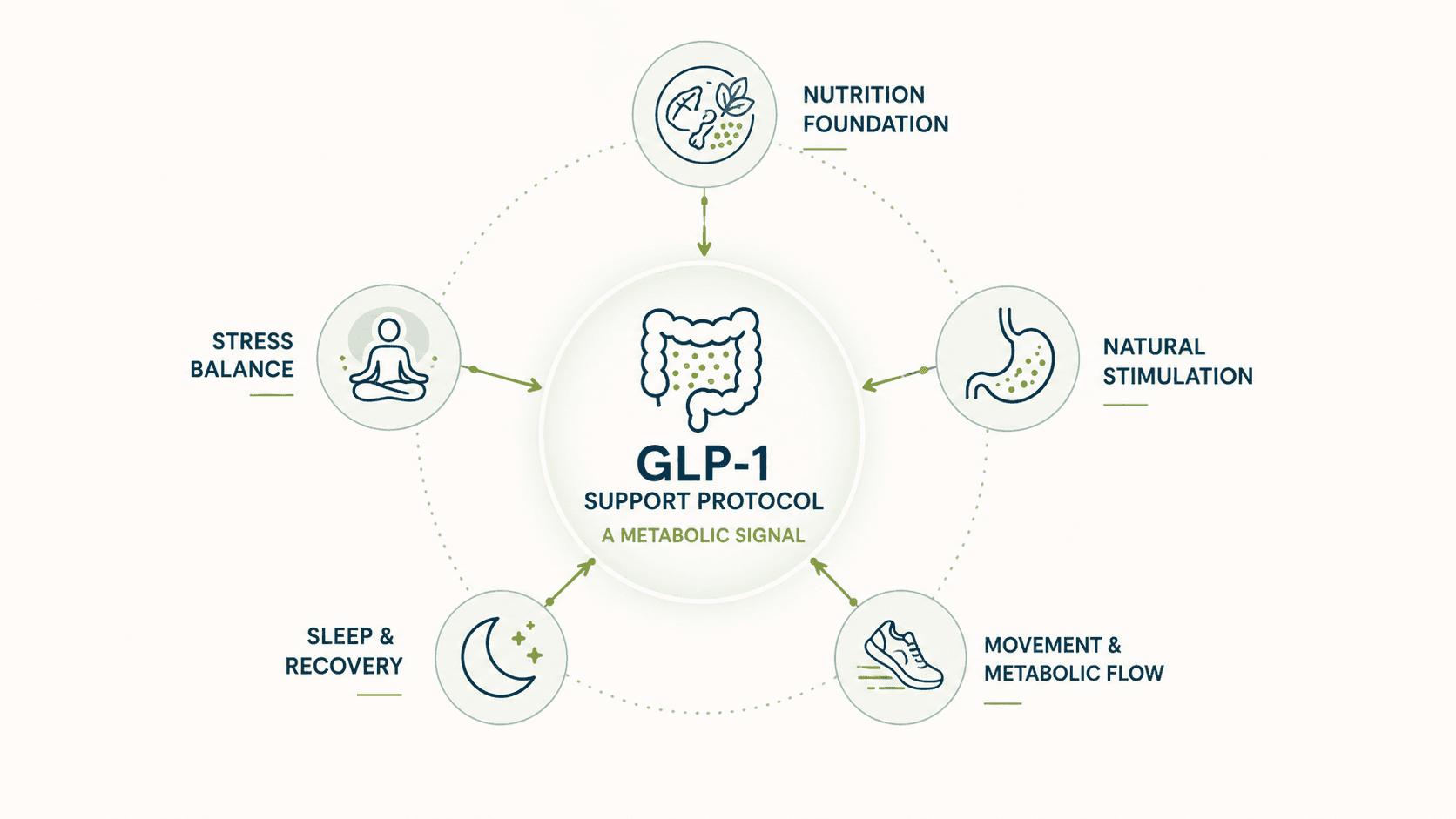
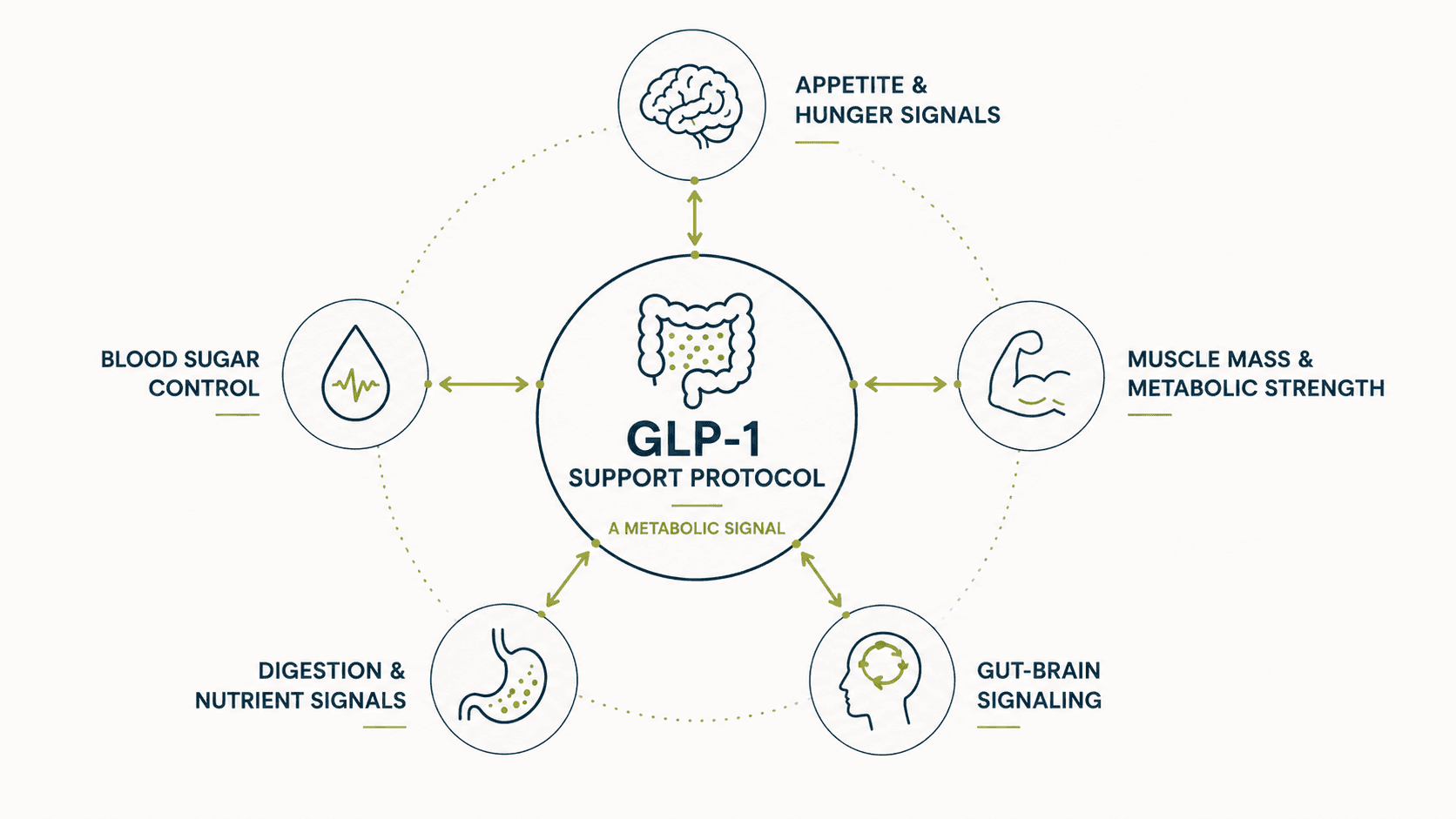
GLP-1 medications have changed what's possible for people managing weight and metabolic health, and the clinical trial data behind them is genuinely strong. But most of the public conversation stops at “does it work,” when the more useful conversation is “what is it actually doing, and what does my body need alongside it.” This page is a framework for that second conversation — the mechanism behind these medications, the tradeoffs worth knowing about, and what happens if you ever stop.
What this means in plain English
GLP-1 medications work by mimicking and amplifying a hormone — glucagon-like peptide-1 — that your gut already produces after you eat. That hormone is part of your body's natural system for insulin release, appetite regulation, and slowing digestion (Drucker, Cell Metabolism, 2018). The medication doesn't introduce something foreign to your biology; it strengthens a signal you already have. That distinction matters, because it means the medication is working with your metabolic system, not replacing it — which is also why what you do alongside it still matters.
Why this happens biologically
GLP-1 is a genuinely multi-system hormone. It prompts your pancreas to release insulin when blood sugar is elevated, suppresses glucagon (which would otherwise raise blood sugar), slows gastric emptying so food is absorbed more gradually, and acts on appetite centers in the brain to increase feelings of fullness (Drucker, Cell Metabolism, 2018). In the pivotal clinical trial that led to semaglutide's approval for weight management, participants using the medication lost an average of 14.9% of body weight over 68 weeks, compared with 2.4% in the placebo group, alongside meaningful improvements in blood pressure and blood sugar (Wilding et al., New England Journal of Medicine, 2021). A subsequent head-to-head trial found that tirzepatide, which acts on both the GLP-1 and GIP receptors, produced even greater average weight loss than semaglutide over 72 weeks (Aronne et al., New England Journal of Medicine, 2025).
That efficacy comes with a tradeoff worth naming plainly: weight loss on these medications isn't only fat loss. A recent meta-analysis pooling 22 randomized trials found that lean muscle mass accounted for roughly a quarter of total weight lost on GLP-1 medications, with the more potent options associated with somewhat greater lean mass reduction (Karakasis et al., Metabolism, 2025). This isn't a reason to avoid these medications — muscle loss is a feature of most significant weight loss, whatever the method — but it is a reason to think about protein intake and resistance training as part of the plan rather than an afterthought.
How it connects to the Metabolic Signaling System
GLP-1 doesn't work in isolation from the rest of your metabolic signaling — it's downstream of the same appetite, blood sugar, and gut-brain systems described throughout this site. Poor sleep, chronic stress, and diets heavy in ultra-processed foods can all blunt your body's own GLP-1 signaling before medication is ever involved, which is part of why some people see dramatic results from lifestyle change alone, and why medication and lifestyle work better as a combination than as alternatives to each other. The same underlying signal is also central to food noise and appetite regulation.
What standard advice often misses
Most conversations about these medications focus entirely on the number on the scale, and stop there. What gets left out is what's happening to body composition during that weight loss, and what happens after — if the medication is ever paused, reduced, or stopped. Both of those questions have real answers, and neither is the kind of thing you want to be caught off guard by later.
How to know where you stand
Whether you're just starting a GLP-1 medication, currently on one, or thinking about what comes after, the useful starting point is the same: understanding your own metabolic baseline — appetite signaling, blood sugar stability, and muscle mass — so you know what you're building on and what you'll need to protect.
Common Questions
Do GLP-1 medications replace the need for a healthy diet?
No. These medications amplify a signaling hormone your body already produces — they don't replace the underlying metabolic and nutritional foundation that determines your long-term results. Diet quality and protein intake remain directly relevant to how much of the weight lost is fat versus muscle.
Is losing muscle on these medications something to worry about?
It's something to plan for rather than worry about. Lean mass loss is a documented part of weight loss on GLP-1 medications, accounting for roughly a quarter of total weight lost in pooled trial data. Discuss protein intake and resistance training with your care team as part of your treatment plan, particularly if you're on a higher-potency medication or losing weight quickly.
What happens if I stop taking my GLP-1 medication?
Clinical trial data shows that stopping is associated with substantial weight regain and reversal of metabolic improvements — on the order of two-thirds of lost weight within a year in one major trial.
Related metabolic signals
Scientific References
- Drucker DJ. Mechanisms of Action and Therapeutic Application of Glucagon-like Peptide-1. Cell Metabolism, 2018.
- Wilding JPH, Batterham RL, Calanna S, et al. Once-Weekly Semaglutide in Adults with Overweight or Obesity. New England Journal of Medicine, 2021.
- Aronne LJ, Bade Horn D, le Roux CW, et al. Tirzepatide as Compared with Semaglutide for the Treatment of Obesity. New England Journal of Medicine, 2025.
- Karakasis P, Patoulias D, Fragakis N, Mantzoros CS. Effect of glucagon-like peptide-1 receptor agonists and co-agonists on body composition: systematic review and network meta-analysis. Metabolism, 2025.
- Wilding JPH, Batterham RL, Davies M, et al. Weight regain and cardiometabolic effects after withdrawal of semaglutide: The STEP 1 trial extension. Diabetes, Obesity and Metabolism, 2022.
Whatever stage you're at with GLP-1 medication, the assessment can help map what your metabolism needs alongside it.
Take the free BeyondGLP Metabolic Assessment →Educational content only. Information explains physiology and is not intended as medical advice. Always consult a qualified healthcare provider regarding medical decisions.