Sugar Cravings: The Complete Doctor-Led Guide
Why sugar cravings happen, when they signal something worth checking, and what actually changes them.
Written by Dr. Steven Gabriel, MD · Board-Certified Emergency Physician · Founder, BeyondGLP · September 2026
Key Takeaways
- Most sugar cravings trace back to a blood sugar dip one to two hours after eating, not a character flaw.
- Cravings after a full meal and cravings with no hunger at all are two different mechanisms — timing tells you which one you're dealing with.
- Blood sugar swings are the single most common reversible driver of chronic cravings.
- What actually reduces cravings is upstream — meal structure, sleep, and stress — not willpower applied to the craving itself.
- Frequent, severe cravings alongside other symptoms are sometimes worth checking with a clinician, not just riding out.

From Dr. Gabriel
“In the emergency department, I see patients who think they’re having a panic attack — shaky hands, racing heart — and it’s a blood sugar crash two hours after a carb-heavy meal. Their body is sounding an alarm, not exposing a character flaw. Once people understand what’s happening in their bloodstream, the craving stops feeling like a mystery and starts feeling manageable.”
Sugar cravings are driven primarily by swings in blood sugar and a reward system that responds more strongly to engineered foods than to whole ones — not by a lack of willpower. This guide covers why cravings happen, what’s different about cravings after meals versus cravings without hunger, and what actually changes them.
Why They Happen
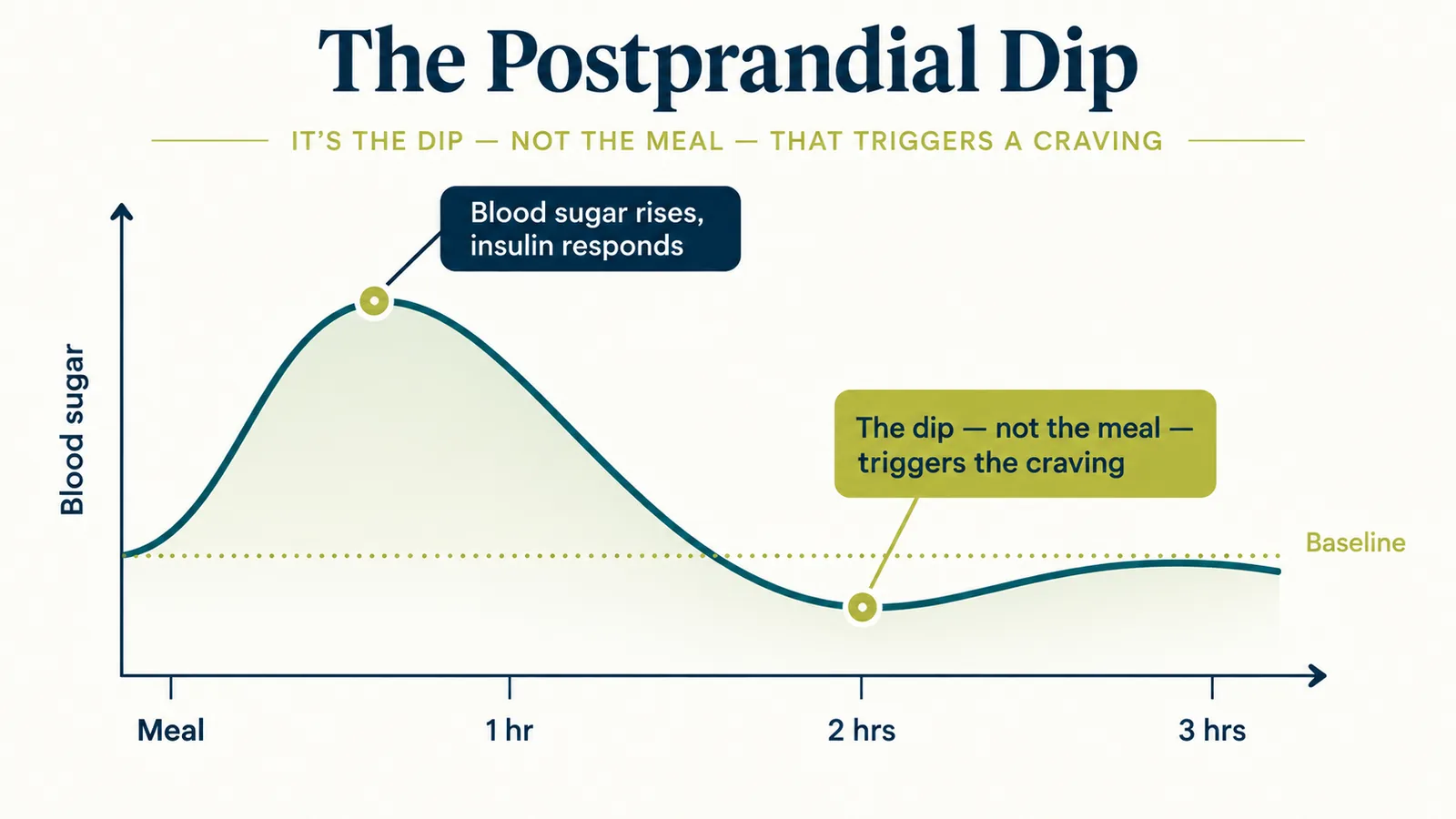
When a meal is heavy on refined carbohydrates with little protein, fibre, or fat to slow it down, blood sugar rises quickly and insulin rises to match it. That fast insulin response can overcorrect, pulling blood sugar below a comfortable baseline within one to two hours of eating. That rebound dip is what your brain reads as an urgent signal: eat something fast-acting, usually sugar, to bring glucose back up. A large study tracking over 1,000 people found that the size of this post-meal dip — not the meal’s size on its own — predicted how hungry people were two to three hours later (1).
After Meals
This is why cravings often show up on a schedule rather than randomly — commonly mid-afternoon, a couple of hours after lunch. It’s not a coincidence and it’s not a sign of a bad lunch choice necessarily; it’s the predictable shape of the same glucose-dip mechanism (1). Noticing the timing is itself useful information: a craving that hits reliably around the same time each day points toward meal structure, not toward the food you’re craving in that moment.
Without Hunger
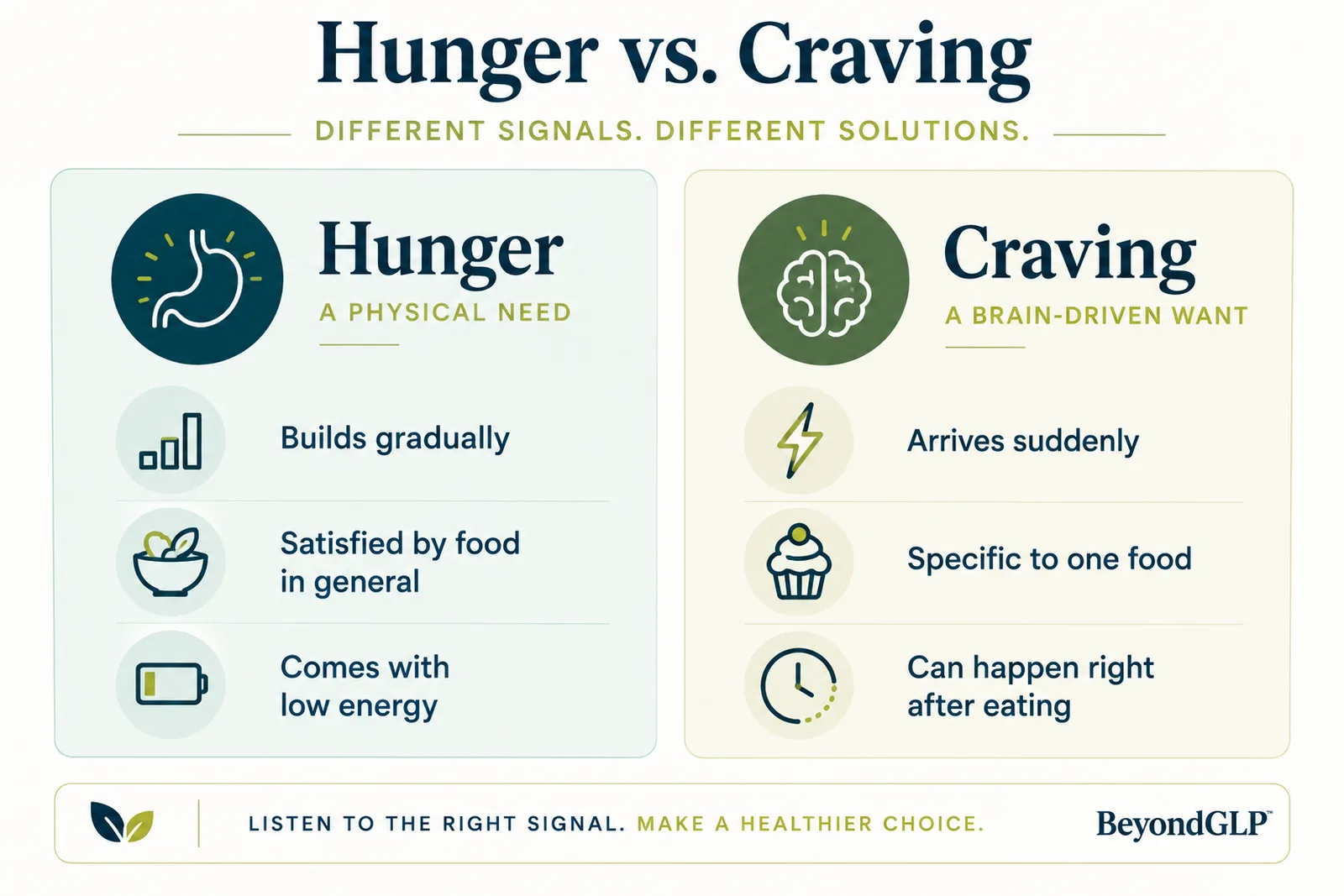
Cravings without physical hunger point to a different driver — usually stress or sleep, not an energy deficit. Ordinary hunger builds gradually and is satisfied by food in general; a craving with no hunger underneath it is sharper, more specific to one food, and often shows up regardless of when you last ate. Sleep loss is one of the clearest drivers here: short sleep is associated with meaningfully higher rates of weight-related outcomes, largely mediated by hormone shifts (ghrelin up, leptin down) rather than late-night eating alone (2). Elevated stress hormones work through a related pathway, intensifying the pull toward high-calorie food independent of actual caloric need.
Blood Sugar and Cravings
Glycaemic variability — how much your blood sugar swings, not just its average — is one of the more reliable predictors of chronic craving intensity. The same rebound-dip mechanism described above can happen in people without diabetes and without any diagnosed blood sugar condition; it’s a function of meal composition and timing more than an existing disease process (1). That said, a pattern of frequent, intense dips is worth mentioning to a clinician, since it can also be an early flag worth checking with labs (see our guide to metabolic lab testing).
What to Do
The most consistent lever is meal structure: protein and fibre ahead of or alongside refined carbohydrates slow the glucose rise and reduce the size of the rebound dip. Fibre in particular does more than slow digestion — fermentation by gut bacteria produces short-chain fatty acids that directly stimulate your own GLP-1 release, which is part of how fibre reduces both hunger and cravings over time (3). Consistent meal timing, a short walk after eating, protecting sleep, and managing stress load round out the list. None of this requires eliminating sugar entirely — it’s about not setting up the crash that creates the craving in the first place.
When It’s Worth Checking With a Clinician
If cravings are constant rather than occasional, come with other symptoms (unusual thirst, fatigue, unexplained weight change), or don’t respond to consistent changes in meal structure and sleep over a few weeks, it’s worth a conversation with a clinician and, if useful, a look at core metabolic labs. The free BeyondGLP Metabolic Assessment is a good starting point for understanding which signal is most likely driving your pattern.
Common Questions
Why do I crave sugar after meals?
It's usually the rebound dip, not the meal itself. Blood sugar overcorrects below baseline roughly one to two hours after eating, and that dip — more than what or how much you ate — predicts how strong the craving will be (1).
Why do I crave sugar when I'm not hungry?
Cravings without hunger are typically stress- or sleep-driven rather than energy-driven. Poor sleep in particular disrupts the hunger hormones ghrelin and leptin independent of how many calories you've eaten (2).
Is sugar actually addictive?
There’s real evidence for a reward-pathway effect, but it’s a bigger question than this page answers directly — see our full breakdown in Cravings, Dependence and Appetite Medication: What’s Real.
Do sugar cravings mean I have a blood sugar problem?
Not necessarily — occasional cravings are normal. But a frequent, intense pattern is a reasonable reason to check core metabolic labs rather than assume it's just willpower.
How long do sugar cravings take to fade?
It varies by person, but many people notice a meaningful difference within one to two weeks of consistent meal-structure and sleep changes. Consistency matters more than any single change.
Scientific References
- 1.Wyatt P, Berry SE, Finlayson G, et al. Postprandial glycaemic dips predict appetite and energy intake. Nat Metab, 2021. PMID: 33846643.
- 2.Cappuccio FP, et al. Meta-analysis of short sleep duration and obesity in children and adults. Sleep, 2012. PMID: 22619371.
- 3.Chambers ES, Viardot A, Psichas A, et al. Effects of targeted delivery of propionate to the human colon on appetite regulation, body weight maintenance and adiposity in overweight adults. Gut, 2015. PMID: 25500202.
Educational only; not medical advice. GLP-1 medications and any change to an existing treatment plan should only happen under the supervision of your physician. Reviewed by Dr. Steven Gabriel, MD, September 2026.
Physician-built · Free · 2 min