What GLP-1 Treatment Actually Costs — and What Changes It
What appetite medication costs with and without insurance, what changes the price, and the questions worth asking first.
Written by Dr. Steven Gabriel, MD · Board-Certified Emergency Physician · Founder, BeyondGLP · September 2026
Key Takeaways
- List price without insurance typically runs roughly $1,030–$1,350/month depending on the specific medication and dose.
- Manufacturer direct cash-pay programs have meaningfully lowered out-of-pocket cost for some products in 2026 — terms change, so check current pricing before relying on any number here.
- With commercial insurance and a manufacturer savings card, many eligible patients pay as little as $25/month.
- Compounded versions exist at lower price points but carry different regulatory oversight than FDA-approved pharmacy products — worth understanding before choosing one.
- Cost is a legitimate reason to reconsider or delay a treatment plan — it isn't a failure of willpower or commitment, and it's worth saying out loud early.

From Dr. Gabriel
“I’ve had patients ration doses or skip weeks because of cost, and not tell me until something went wrong. Cost isn’t a side conversation to the medical one — it’s part of whether a treatment plan is actually sustainable. If the price doesn’t work long-term, that’s worth saying early, not something to quietly work around on your own.”
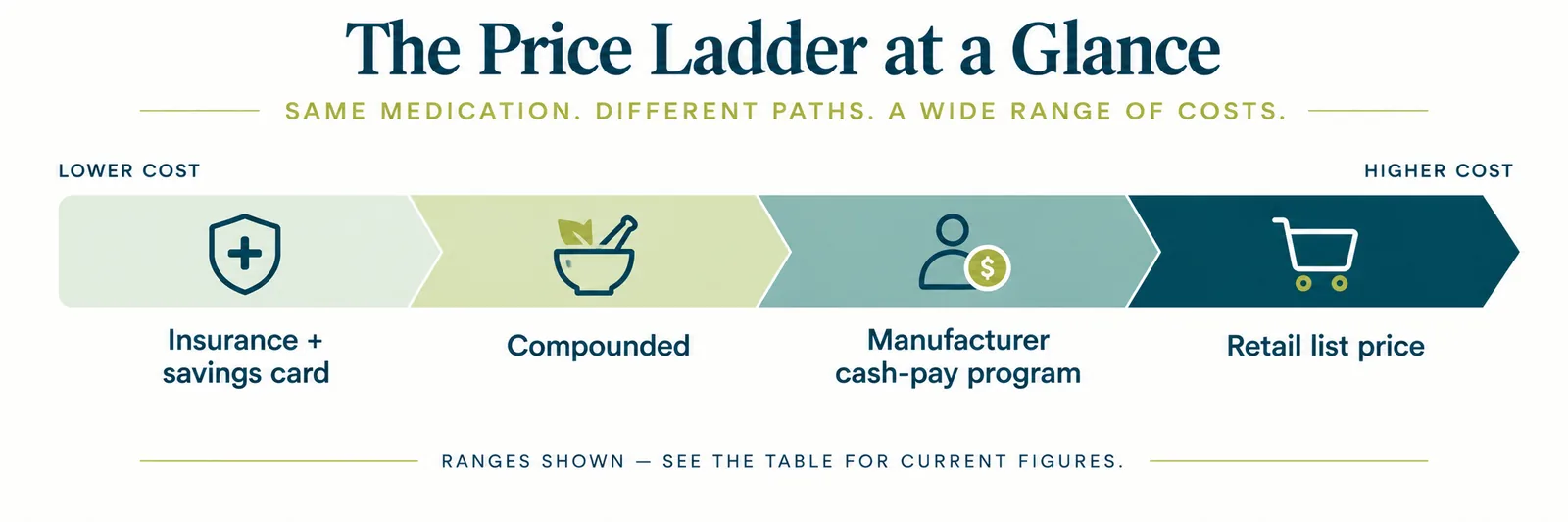
Without insurance, GLP-1 medications typically list between roughly $1,030 and $1,350 a month depending on the drug and dose. With commercial insurance and a manufacturer savings card, many people pay as little as $25 a month; cash-pay manufacturer programs and compounded versions can bring cost meaningfully lower for some people.
What It Costs, With and Without Insurance
| Path | Typical monthly range | Notes |
|---|---|---|
| Retail list price (no insurance, no program) | ~$1,030–$1,350 | Varies by drug and dose — Ozempic and Mounjaro toward the lower end, Wegovy and Zepbound toward the higher end at some doses |
| Manufacturer cash-pay programs (e.g. NovoCare, LillyDirect) | ~$150–$500 | Terms and eligibility change frequently; some tiers require a specific dose or prescription type |
| Commercial insurance + manufacturer savings card | From ~$25 | Requires eligible commercial insurance; these cards generally exclude Medicare and Medicaid |
| Compounded versions | Varies | Different regulatory oversight than FDA-approved pharmacy products — a conversation to have directly with your prescriber about sourcing |
| Emerging government pricing programs (2026) | As little as $50/month for eligible Medicare enrollees |
Prices as of September 2026.
What Changes the Price
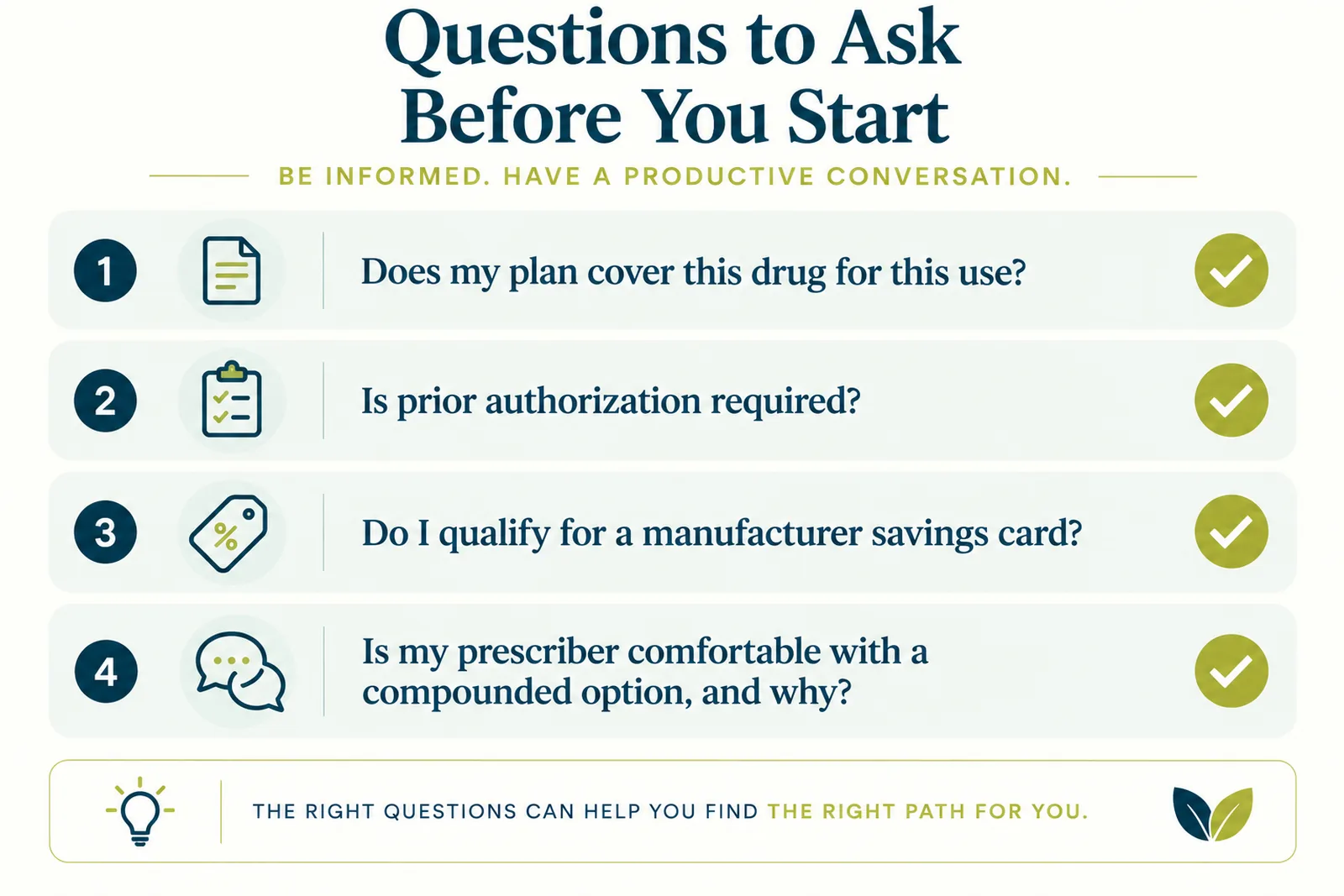
The biggest factors are whether your insurance covers the specific drug for your specific indication (weight management and diabetes are often covered differently, even for the same drug), whether prior authorization is required, which pharmacy or manufacturer program you use, the specific dose prescribed, and your region.
Questions Worth Asking Before You Start
Does my plan cover this medication for this specific use, and is prior authorization required? Is there a manufacturer savings card I qualify for, and what happens to my price if my insurance status changes? If a compounded option is on the table, is my prescriber comfortable with it and why or why not? These are reasonable, specific questions to bring to your physician or pharmacist before starting.
When Cost Is the Signal to Reconsider the Approach
If the ongoing cost makes consistent use genuinely unsustainable, that’s worth discussing honestly with your physician rather than quietly skipping doses or stretching a supply — inconsistent use can produce a worse outcome than a planned, sustainable approach from the start. This is also a reasonable point to revisit natural and lifestyle-based support, either as a bridge or as a complement (see our full comparison of medication, natural support, and combined approaches).
Common Questions
How much does Ozempic cost without insurance?
Roughly $1,027.51/month at list price as of September 2026, though this figure moves often — cash-pay and savings-card options can bring it down substantially for people who qualify.
Is Wegovy covered by insurance?
It depends entirely on your specific plan and whether it's being prescribed for weight management versus another indication — coverage varies widely, so this is a call to your insurer, not a general yes or no.
Why is the price so different between pharmacies?
Retail list price, manufacturer direct-pay programs, insurance negotiated rates, and compounded alternatives are essentially different markets for the same or related drug — that's why the range is so wide.
What if I can't afford it?
Manufacturer savings cards, direct cash-pay programs, and a conversation with your physician about compounded options or alternative approaches are all worth exploring — cost alone is a legitimate reason to revisit the plan, not a reason to go without a conversation about it.
Related Reading
This page makes no clinical efficacy claims and carries no PMID citations. Educational only; not medical advice, and not financial or insurance advice. Prices vary by region, insurer, pharmacy, and individual plan, and change frequently — the ranges on this page are directional, not guaranteed, and were last checked September 2026. Always confirm current pricing directly with your insurer, pharmacy, or the manufacturer. GLP-1 medications should only be started, changed, or stopped under the supervision of your physician. Reviewed by Dr. Steven Gabriel, MD, September 2026.
Physician-built · Free · 3 min