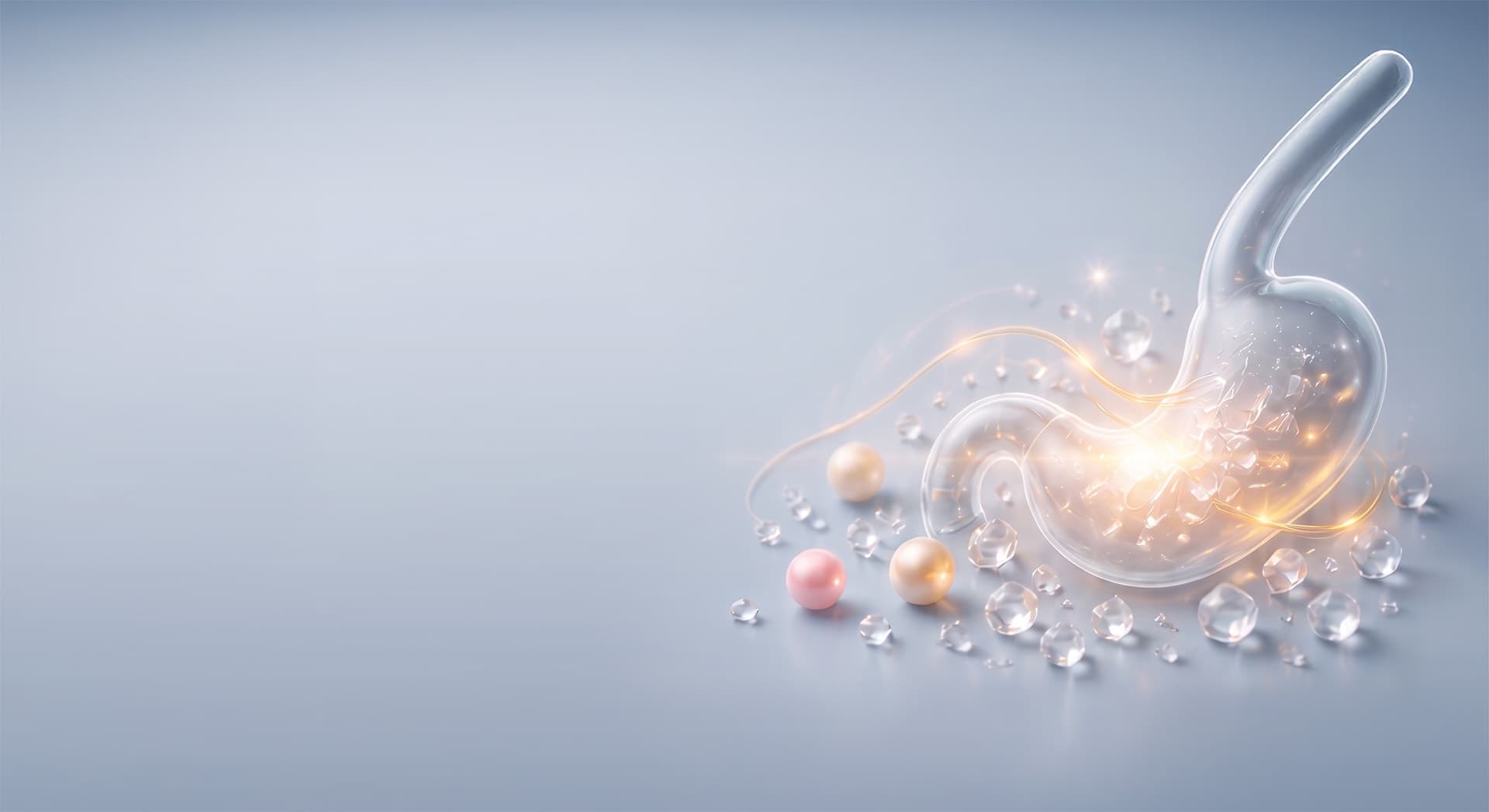
What GLP-1 Actually Does
Understand How Your Body Controls Hunger, With or Without Medication
Written by BeyondGLP Editorial Team · Medically reviewed by Dr. Steven Gabriel, MD
Medically reviewed by Dr. Steven Gabriel, MDIf your appetite feels unpredictable, or you're using GLP-1 medications but still unsure what's happening in your body, this guide explains the system behind hunger, fullness, and food control. This isn't about forcing less food. It's about understanding the signal that regulates appetite.
Short answer: GLP-1, or glucagon-like peptide-1, is a hormone your body releases after eating. It helps signal fullness, slows how quickly food leaves the stomach, supports insulin response, and helps keep blood sugar steadier. GLP-1 medications amplify this same appetite-regulating signal.
Why this matters
when GLP-1 signaling works well
- Hunger feels predictable
- You feel full after meals
- Cravings are reduced
- Eating feels easier to control
When appetite signals feel unstable
when it doesn't
- You feel hungry soon after eating
- Cravings increase
- Portions feel harder to manage
- Consistency becomes difficult
Appetite is not random. It's regulated.
What's actually happening
When you eat, natural GLP-1 production begins in the gut. The signal travels through the digestive system, pancreas, and brain to help the body decide when you have had enough food and how to manage incoming glucose.
In simple terms, GLP-1 helps by sending fullness signals to the brain, slowing stomach emptying so meals feel more satisfying, supporting insulin release when blood sugar rises, and reducing the intensity of hunger and some cravings.
Together, these signals can make appetite feel more predictable.
GLP-1 signals fullness → slows stomach emptying → regulates blood sugar.
Why hunger can feel hard to control
Most people think hunger is about:
- Willpower
- Discipline
- "Eating too much"
But appetite is largely driven by biology.
Even with GLP-1 medications:
- Some people still feel cravings
- Hunger can return unexpectedly
- Eating patterns still matter
Medication can support the system, but it doesn't replace it.
What this looks like in real life
You might notice:
- You feel less hungry on medication, but not always
- Some meals still trigger cravings
- Hunger comes back at certain times of day
- You're unsure how much to eat
This means the underlying system still needs support.
How GLP-1 medications work
GLP-1 medications (like semaglutide):
- Mimic this natural hormone
- Amplify fullness signals
- Reduce appetite and cravings
- Examples include semaglutide-based medications such as Ozempic and Wegovy
This can make it easier to:
- Eat less without forcing it
- Stay consistent
- Lose weight more sustainably
Each GLP-1 medication has different approved uses, dosing, risks, and clinical considerations. Decisions about starting, stopping, or changing a GLP-1 medication should be made with a qualified clinician.
What medication does not do
GLP-1 does not:
- Fix meal structure automatically
- Replace protein, fiber, or balanced nutrition
- Protect muscle by itself
- Eliminate all cravings
This is where many people get stuck: medication can lower appetite, but the body still needs enough nutrients, repeatable meals, and metabolic support.
The GLP-1 gap
Even with medication, if meals are not structured well:
- Hunger can return
- Energy can drop
- Progress can stall
- Muscle loss risk can increase if protein and strength work are too low
This does not mean GLP-1 has 'stopped working.' It often means the appetite signal is being supported, but the rest of the system still needs structure.
How this helps
Stop blaming willpower
Use medication more effectively
Build habits that sustain results
Maintain progress long-term

Start here
Apply what you learned about GLP-1.
- 1Pay attention to how meals affect hunger
- 2Don't rely on medication alone
- 3Focus on meal structure (see related guides)
- 4Support your metabolism alongside GLP-1
Small changes → more stable metabolism.
Related Guides
the guides library →
See your metabolic profile
Takes just a few minutes. Instant results.
Personalized guides · Science-backed · 100% Free
Doesn't have to be perfect. Just repeatable. BeyondGLP.com