
Why Ultra-Processed Foods Make Fat Loss Harder
It's Not Just Calories. It's How Your Food Impacts Your Biology
Written by BeyondGLP Editorial Team · Medically reviewed by Dr. Steven Gabriel, MD
Medically reviewed by Dr. Steven Gabriel, MDIf losing fat feels tougher than it should, it's not only about how much you eat. It's about how ultra-processed foods disrupt your hunger, energy, and metabolism, making fat loss more difficult.
Quick answer: ultra-processed foods can make fat loss harder because they digest quickly, are easy to overeat, and can drive hunger, cravings, and blood sugar swings. Reducing them does not require perfection. The goal is to build meals that keep energy steadier and appetite easier to manage.
Why this matters
when it works well
- Keep hunger under control
- Maintain steady energy
- Reduce cravings
- Staying consistent feels easier
When ultra-processed foods dominate
when it doesn't
- Cravings throughout the day
- Feel hunger sooner than expected
- Energy spikes & crashes
- Difficulty staying consistent with weight loss, even when trying

What's actually happening
Ultra-processed foods are products made mostly from refined ingredients, added sugars, industrial fats, flavorings, emulsifiers, or other additives. They are often convenient and highly palatable, which means they can be easy to eat quickly and hard to stop eating.
These foods often digest quickly, especially when they are low in protein and fiber. That can make it harder to stabilize blood sugar after meals and may lead to a familiar cycle: a quick rise in energy, a crash soon after, and hunger or cravings returning earlier than expected.
Diets high in ultra-processed foods are also associated with changes in gut bacteria, lower diet quality, and more inflammatory patterns. For some people, this may interfere with hunger and fullness cues.
Blood sugar spikes → crashes → triggers hunger + cravings → leads to overeating.
Why they make everything harder
Ultra-processed foods negatively impact your body in four ways:
- 01
Don't satisfy hunger
- 02
Upset blood sugar levels
- 03
Impact gut health
- 04
Harm metabolism over time
Cutting back makes consistency achievable.
What to do first
- 01Start with one simple change
- 02Build meals around protein and fiber
- 03Avoid liquid sugar (drinks, smoothies)
- 04Keep whole, simple foods available
- 05Protect muscle during weight loss, especially if appetite is lower than usual
Simple meal framework
Protein + fiber-rich carbohydrate + healthy fat
Examples:
- Avocado + whole grain toast + eggs
- Tofu + brown rice + vegetables
- Greek yogurt + berries + nuts

Start this week
Replace one ultra-processed meal a day.
Small changes → more stable metabolism.
A note for people using GLP-1 medications: cutting back on ultra-processed foods may make it easier to meet protein and fiber needs when appetite is lower. It may also help reduce blood sugar swings and support steadier energy. If nausea, very low appetite, dizziness, or digestive symptoms make eating difficult, speak with your clinician before making major diet changes.
Related Guides
the guides library →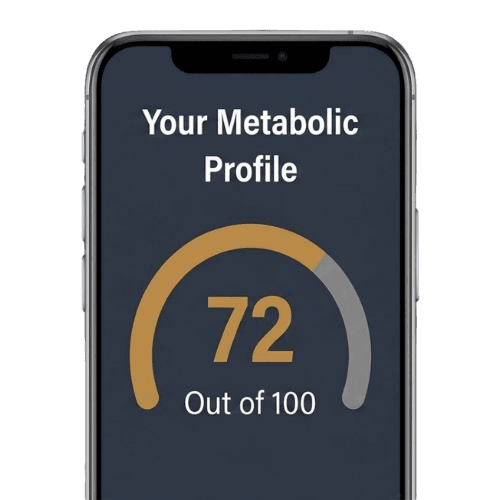
See your metabolic profile
Takes just a few minutes. Instant results.
Personalized guides · Science-backed · 100% Free
Doesn't have to be perfect. Just repeatable. BeyondGLP.com