How Gut Health Affects Appetite, GLP-1, and Metabolism
Fix Your Gut Signals. Balance Hunger, Energy, and Fat Loss
Written by BeyondGLP Editorial Team · Medically reviewed by Dr. Steven Gabriel, MD
Medically reviewed by Dr. Steven Gabriel, MDYour gut does more than digest food. It controls hunger signals, blood sugar, inflammation, and how your body uses energy. If you're doing the right things but still facing cravings, energy dips, or slow fat loss, your gut could be the missing link.
Short answer: your gut helps regulate appetite, blood sugar, and energy through digestive signals and hormones, including GLP-1. When gut health is disrupted, fullness cues can weaken, cravings can increase, and metabolism can feel harder to manage, even when you are trying to eat well.
Why gut health matters for metabolism
when it works well
- Feel satisfied after meals
- Your energy stays steady
- Fat loss feels more manageable
- Hunger comes at the right times
When gut signals are disrupted
when it doesn't
- Sugar cravings increase
- Your energy spikes & crashes
- Hungry too soon after eating
- Staying consistent feels tougher than it should

What's actually happening
Your gut acts as a key metabolic control center. After you eat, it helps release signals that tell your brain and pancreas what to do next: slow digestion, support insulin response, manage blood sugar, and signal fullness.
GLP-1 is one of these gut-related hormones, which is why gut health, appetite, and metabolic stability are closely connected. Your gut affects appetite hormones (including GLP-1), blood sugar levels, inflammation, and nutrient absorption.
When this system is out of balance, your body can send confusing hunger, craving, or energy signals.
Appetite signals break down → blood sugar becomes unstable → inflammation rises
What causes poor gut health

Ultra-Processed Foods

Low Fiber Intake

High Sugar Intake
Chronic Stress
What to do first
- 01
Build meals around protein
- 02
Add fiber (vegetables, whole foods)
- 03
Keep meals regular and structured
- 04
Limit ultra-processed foods
Support your gut daily
- 01Eat fiber with every meal
- 02Choose whole foods over packaged
- 03Manage stress, as it disrupts gut signals
- 04Keep meal timing regular instead of grazing all day
- 05Drink enough fluids to support digestion
Fiber-rich foods to include daily
Choose 1–2 every day
Examples:
- Vegetables
- Beans or lentils
- Oats or other whole grains
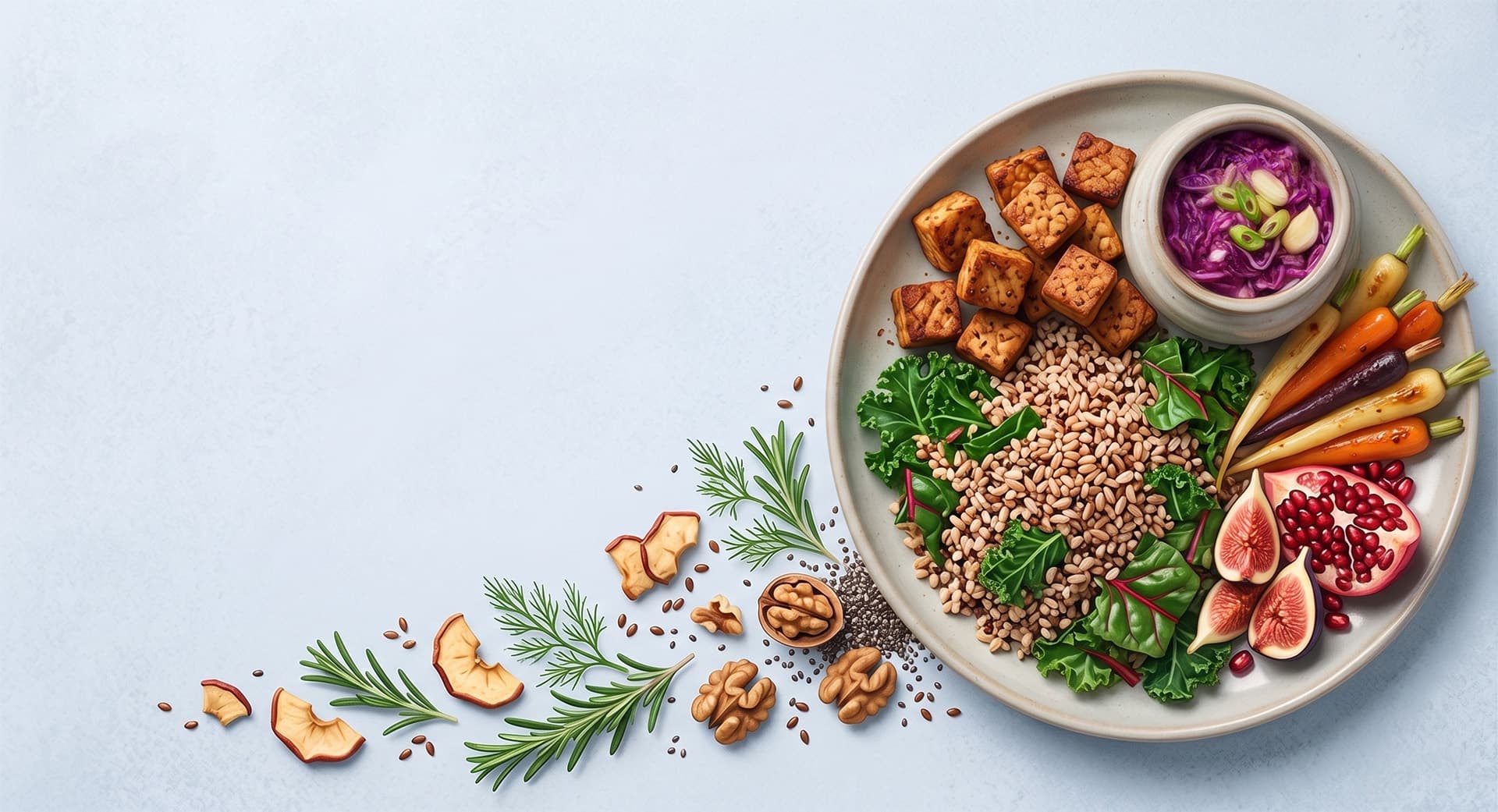
- Chia, flax, nuts, or seeds
- Berries or other high-fiber fruit

Start here this week
Swap one processed food with a whole-food alternative.
Small changes → more stable metabolism.
When to get support: speak with a qualified clinician if bloating, stomach pain, diarrhea, constipation, dizziness, or blood sugar symptoms are frequent or worsening. If you are using a GLP-1 medication and notice persistent nausea, low appetite, weakness, or trouble eating enough protein, do not try to manage it with diet changes alone.
Related Guides
the guides library →
See your metabolic profile
Takes just a few minutes. Instant results.
Personalized guides · Science-backed · 100% Free
Doesn't have to be perfect. Just repeatable. BeyondGLP.com