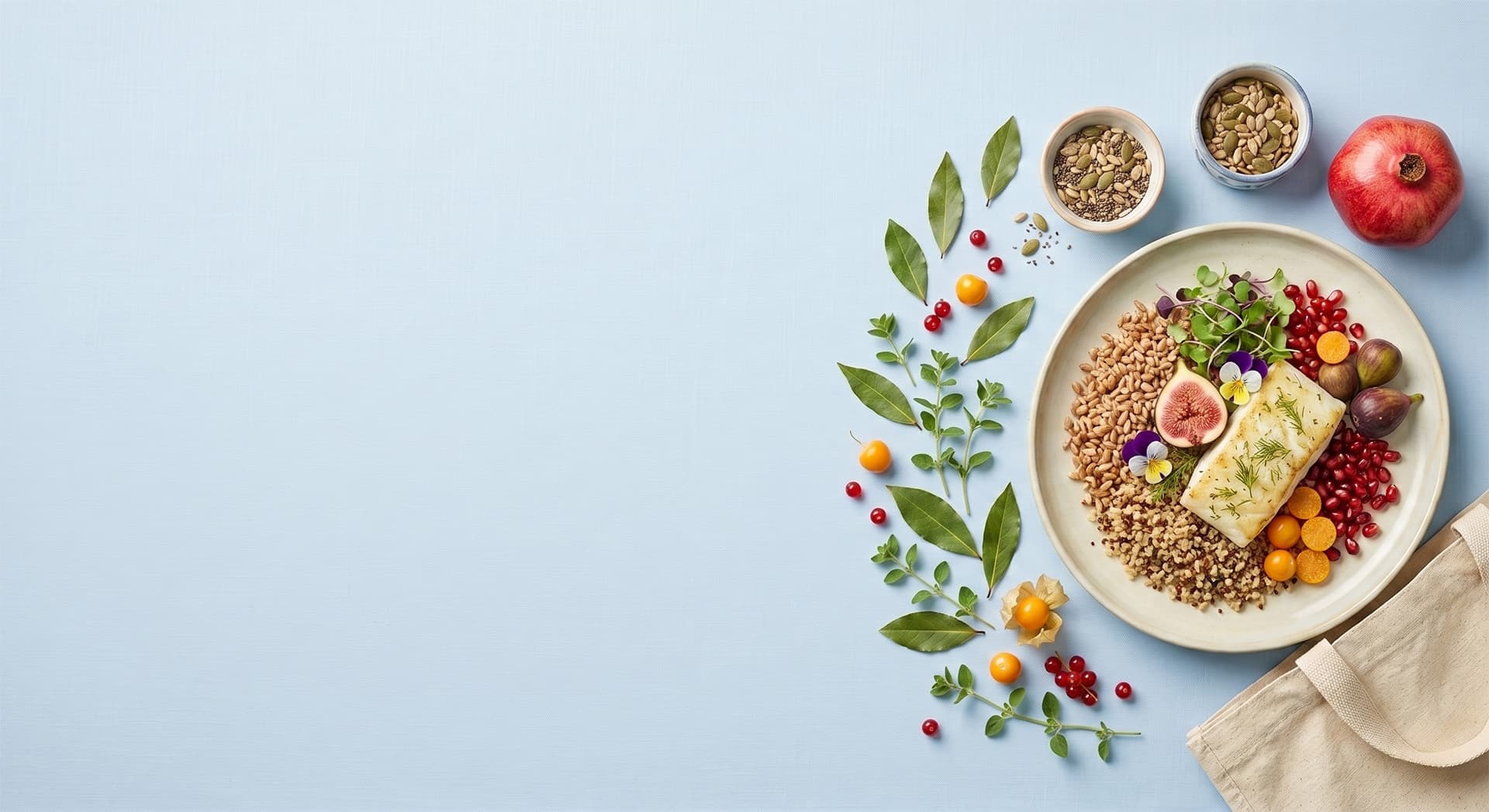
Grocery Guide for Real Food Eating
Make Better Food Choices, Without Overthinking It
Written by BeyondGLP Editorial Team · Medically reviewed by Dr. Steven Gabriel, MD
Medically reviewed by Dr. Steven Gabriel, MDIf you know what to eat but struggle when it comes to grocery shopping, you're not alone. Most food environments are designed to make unhealthy choices easier. This isn't about perfection. It's about making better choices easier, starting at the store.
Quick answer: real-food grocery shopping means buying mostly minimally processed foods that make balanced meals easier to prepare. A simple grocery routine can help steady blood sugar, support appetite signals, and make cravings easier to manage, whether or not you use GLP-1 medication.
Why your grocery environment matters
when your kitchen is stocked well
- Meals are easier to prepare
- Cravings are easier to manage
- Consistency improves naturally
- Healthy choices require less effort
When it isn't
when it isn't
- You rely on convenience foods
- You snack more often
- Meals become inconsistent
- Progress feels harder
Your environment drives your behavior more than willpower.
What's actually happening
Your food environment shapes your food quality, which drives meal structure and hunger signals. If your inputs are off, your metabolism becomes harder to manage.
In practical terms, the foods you bring home shape what you eat when you are tired, busy, hungry, or deciding quickly. Protein, fiber-rich plants, and minimally processed staples make balanced meals easier; ultra-processed snacks and sugary drinks make blood sugar swings and cravings more likely.
Food quality → meal structure → hunger signals
Why grocery shopping feels hard
Grocery stores are built to:
- Promote ultra-processed foods
- Trigger impulse decisions
- Make convenience the default
Even with good intentions:
- It's easy to grab quick options
- Labels can be confusing
- "Healthy" products are often misleading
This is where many people lose control of their plan, before they even start eating.
What this looks like in real life
You might notice:
- You go shopping without a plan
- You buy snacks "just in case"
- You rely on packaged meals
- You feel like you don't have the right foods at home
This makes it much harder to stay consistent.
How to shop for real food
Simple categories to prioritize
- Protein: eggs, Greek yogurt, chicken, fish, tofu, lean meat, beans, lentils
- Vegetables and fruit: fresh or frozen options you will actually use
- Fiber-rich carbs: oats, potatoes, beans, lentils, brown rice, whole grains
- Healthy fats: olive oil, avocado, nuts, seeds, nut butter
- Low-effort meal builders: rotisserie chicken, salad kits, frozen vegetables, canned beans, pre-cooked grains
What to limit most often
- Ultra-processed foods
- Sugary drinks
- Packaged snacks you tend to overeat
- "Low calorie" foods that do not keep you full
- Foods that trigger digestive symptoms or make appetite harder to manage
How this helps
Improving your grocery choices:
- 01
Makes healthy eating easier
- 02
Reduces reliance on willpower
- 03
Helps support steadier hunger, energy, and blood sugar
- 04
Supports sustainable fat loss and a more repeatable routine

Start with one better grocery trip
Start simple: fix one grocery trip first.
Your environment drives your behavior more than willpower.
Related Guides
the guides library →
See your metabolic profile
Takes just a few minutes. Instant results.
Personalized guides · Science-backed · 100% Free
Doesn't have to be perfect. Just repeatable. BeyondGLP.com