
How Sleep Affects Your Metabolism
Improve Sleep. Improve Hunger, Energy, and Cravings
Written by BeyondGLP Editorial Team · Medically reviewed by Dr. Steven Gabriel, MD
Medically reviewed by Dr. Steven Gabriel, MDPoor sleep can make hunger, cravings, blood sugar swings, and low energy harder to manage. This guide explains the sleep-metabolism connection and where to start.
Sleep is one of the main inputs your body uses to regulate appetite signals, glucose control, stress hormones, and energy. When sleep is short, irregular, or low quality, the body may push for faster energy, often through sugar cravings, heavier caffeine use, or larger portions.
Why sleep matters for metabolism
when it works well
- Stabilizes hunger signals
- Reduces cravings
- Boosts steady energy
- Recovery improves
When sleep is short or disrupted
when it doesn't
- Late-night cravings
- Heavy caffeine use
- Afternoon energy crashes
- Feeling wired yet tired
- Less consistent food choices
What's actually happening
Poor sleep can shift the signals that regulate hunger and energy. Ghrelin, a hunger hormone, may rise. Leptin, a fullness signal, may become less reliable. Cortisol, the stress hormone, can also stay elevated when sleep is disrupted.
Sleep helps coordinate several systems that affect metabolic health: hunger hormones (appetite feels louder, fullness less clear), blood sugar (insulin sensitivity may drop), stress (elevated evening cortisol keeps the body alert), and circadian rhythm (irregular timing disrupts daily energy and digestion).
Poor sleep does not ruin metabolism overnight, but it can make the system less predictable.
Poor sleep → fatigue → sugar cravings → metabolic imbalance.
The sleep cycle
Poor sleep often creates a loop: you sleep less or wake up often, energy drops the next day, sugar and caffeine become more appealing, blood sugar becomes less stable, and evening fatigue plus stimulation make sleep harder again.
Breaking the loop usually starts with sleep timing, light exposure, and a simpler evening routine, not more willpower.
Less sleep → low energy → sugar/caffeine → unstable blood sugar → harder to sleep
How to get better sleep

Avoid excess caffeine

Consistent bedtime + wake time

Cool, dark, quiet bedroom
What to do first
- 01Keep a consistent bedtime and wake time, including weekends when possible
- 02Get bright light earlier in the day and dimmer light at night
- 03Limit stimulating screens, work, and intense conversations before bed
- 04Keep the room cool, dark, and quiet
- 05Avoid using caffeine as the main fix for poor sleep
Simple meal framework
Protein + fiber-rich carbohydrate + healthy fat
Examples:
- Steak + steamed broccoli
- Hard-boiled egg + avocado
- Greek yogurt + berries + nuts

Start with a 7-day reset
Choose one bedtime, set a screen cutoff, and make your bedroom easier to sleep in. Track morning energy, cravings, and afternoon crashes.
 + Regular bedtime
 + Optimize sleep space
 − Cut screen time
Small changes → more stable metabolism.
When to get help: talk with a healthcare professional if you have persistent insomnia, loud snoring, gasping during sleep, severe daytime fatigue, dizziness, or symptoms of low blood sugar. Sleep apnea, medication effects, stress, and glucose changes can all affect sleep and metabolism.
Related Guides
the guides library →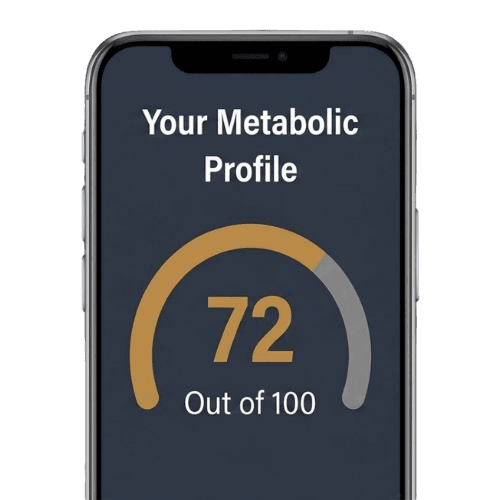
See your metabolic profile
Takes just a few minutes. Instant results.
Personalized guides · Science-backed · 100% Free
Doesn't have to be perfect. Just repeatable. BeyondGLP.com