GLP-1 Medications vs. Natural GLP-1 Support: Understanding Your Options for Weight Management
A comprehensive comparison of pharmacologic and natural approaches, and why the most effective strategy often combines both
Written by BeyondGLP Editorial Team · Medically reviewed by Dr. Gabriel, MD
Key Takeaways
- GLP-1 medications like semaglutide and tirzepatide activate receptors pharmacologically, providing powerful appetite suppression while in use
- Natural GLP-1 support focuses on improving post-meal signaling, metabolic context, and your body's own appetite regulation systems
- Neither approach permanently resets GLP-1 production. Understanding this is key to sustainable weight loss planning.
- A hybrid approach combining medication for control with natural GLP-1 support for durability often produces the most sustainable weight management results
From Dr. Gabriel
In clinical practice, I often see patients experience strong appetite control while using GLP-1 medications, followed by frustration when that control fades after stopping. The medication provides a powerful, sustained fullness signal while present, but it does not permanently change how the body produces or regulates GLP-1. This is why building a metabolic foundation through natural GLP-1 support strategies is essential for sustainable weight management.
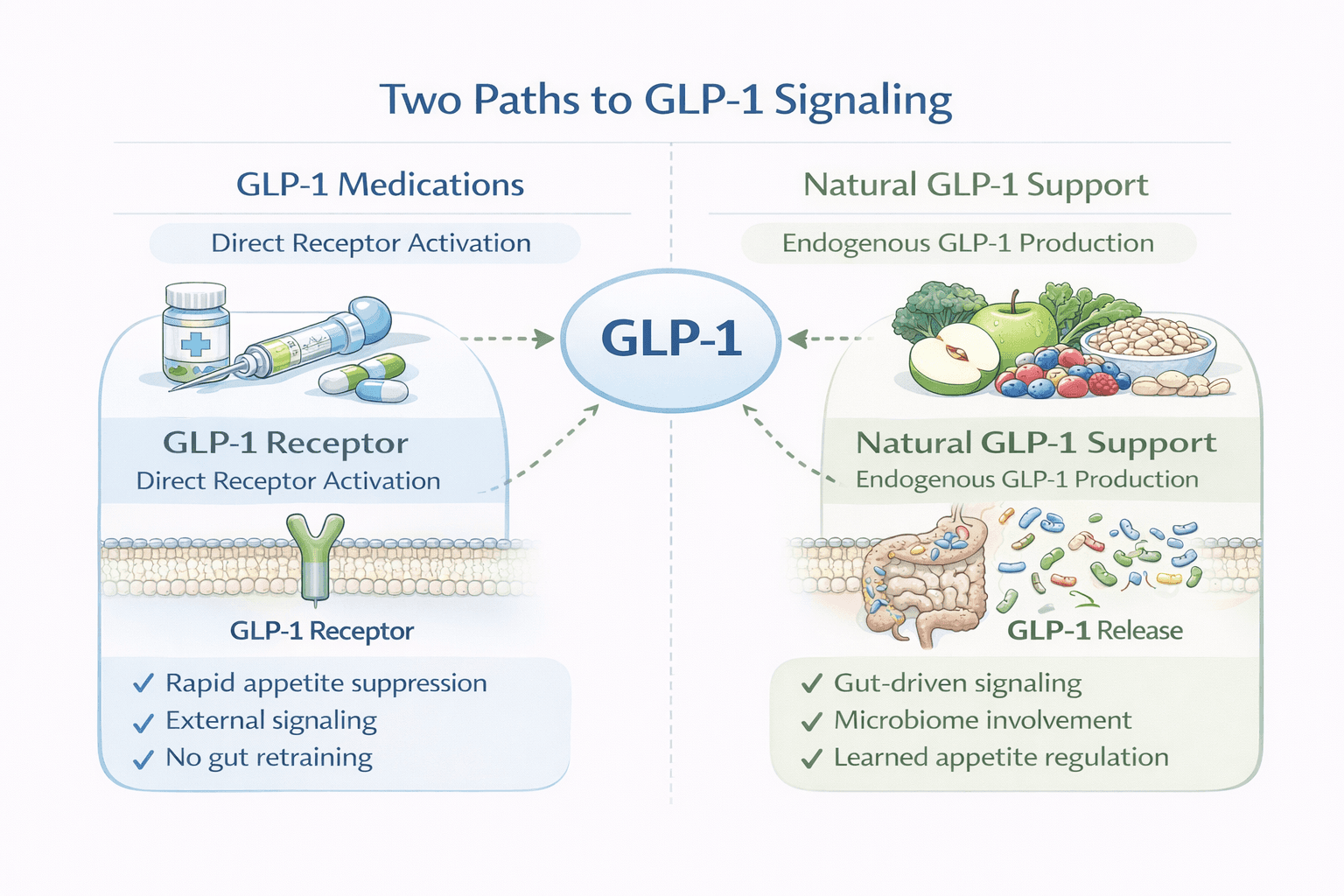
GLP-1 medications and natural GLP-1 support are often framed as opposing approaches: medical intervention versus lifestyle change. In practice, they address different aspects of appetite regulation and work through different mechanisms.
GLP-1 medications provide pharmacologic activation of GLP-1 receptors, creating sustained appetite suppression while in use. Natural support focuses on enhancing post-meal GLP-1 release and improving the metabolic context in which appetite regulation occurs.
This article explains how each approach works, what they can and cannot do, and how to think about using both together.
How GLP-1 Medications Work
GLP-1 receptor agonists (such as semaglutide, tirzepatide, liraglutide) are synthetic molecules that activate GLP-1 receptors throughout the body. Unlike endogenous GLP-1, which is rapidly degraded after release, these medications remain active in the bloodstream for extended periods.
This creates:
- Sustained receptor activation, independent of meals
- Strong appetite suppression in most users
- Dose-dependent effects on satiety and weight loss
- Effects that are present only while the medication is in use
GLP-1 medications do not increase the body’s natural production of GLP-1. They provide an external, pharmacologic signal that mimics what endogenous GLP-1 does, but at a much higher intensity and duration.
What Natural GLP-1 Support Actually Means
Natural GLP-1 support refers to nutrition and lifestyle patterns that enhance the body’s own post-meal GLP-1 release and improve the metabolic environment in which appetite regulation occurs.
This includes:
- Protein-forward meals that trigger stronger GLP-1 secretion
- Fiber and fermentable carbohydrates that support gut health
- Resistance training and muscle preservation to improve insulin sensitivity
- Meal consistency and metabolic stability
Natural support does not create the same level of appetite suppression as medications. It does not permanently increase baseline GLP-1 production. What it does is build the metabolic foundation that determines how appetite regulation functions over time.
Core Differences at a Glance
Mechanism:
- Medications: Pharmacologic receptor activation
- Natural support: Enhanced post-meal release + improved metabolic context
Appetite effect:
- Medications: Strong, sustained suppression while in use
- Natural support: Moderate improvement in satiety and hunger predictability
Dependency:
- Medications: Effects stop when medication is discontinued
- Natural support: Effects depend on maintaining habits and metabolic health
Neither approach permanently resets GLP-1 production. Medications provide control while in use. Natural support builds stability over time.
A Hybrid Perspective
In practice, many people benefit from combining both approaches. GLP-1 medications provide a tool for appetite control during weight loss. Natural support creates the metabolic foundation that determines what happens after the medication stops.
This is not an either-or decision. The most durable outcomes often come from using medication as leverage while building the systems (muscle mass, insulin sensitivity, meal habits) that create long-term stability.
Tools provide control. Systems create durability.
Common Questions
Do GLP-1 medications permanently change appetite hormones?
No. When GLP-1 medication stops, pharmacologic receptor activation ends and endogenous GLP-1 signaling returns to its prior pattern. This is why BeyondGLP emphasizes building natural metabolic support systems alongside medication for sustainable weight management.
Can natural GLP-1 support replace medication for weight loss?
For some people, natural GLP-1 support including protein-forward nutrition, satiety-focused eating strategies, and habits that support a healthy metabolic rate can enhance appetite regulation significantly. For others, medication remains necessary. The most effective approach often combines both for sustainable weight management.
Does natural GLP-1 support increase production long-term?
Natural GLP-1 support enhances post-meal GLP-1 release and improves the metabolic context in which appetite regulation occurs, but it does not permanently increase baseline GLP-1 levels. The goal is creating conditions where your body's natural appetite regulation functions more predictably.
What is the best approach for women considering GLP-1 options for weight loss?
The best supplement for women's weight loss depends on individual metabolic needs. BeyondGLP recommends a comprehensive approach combining satiety-focused nutrition, muscle-preserving strategies, and insulin sensitivity support. Whether using GLP-1 medications or natural support strategies, addressing the broader metabolic system produces the most sustainable results.
Scientific References
- Drucker DJ. Mechanisms of action and therapeutic application of glucagon-like peptide-1. Cell Metabolism PubMed
- Wilding JPH et al. Once-weekly semaglutide in adults with overweight or obesity. New England Journal of Medicine PubMed
- Tolhurst G et al. Short-chain fatty acids stimulate glucagon-like peptide-1 secretion. Diabetes PubMed
Educational content only. Information explains physiology and is not intended as medical advice. Always consult a qualified healthcare provider regarding medical decisions.