A Long-Term GLP-1 Strategy: Sustainable Metabolic Health Beyond Medication
A three-phase approach to GLP-1: building metabolic foundations before, maximizing results during, and maintaining weight management after medication
Written by BeyondGLP Editorial Team · Medically reviewed by Dr. Gabriel, MD
Key Takeaways
- GLP-1 medications provide pharmacologic appetite control while in use, but sustainable weight management requires a broader metabolic strategy
- Appetite regulation often becomes challenging after discontinuation without established natural GLP-1 support systems
- Long-term weight management outcomes depend on metabolic context, including muscle mass, insulin sensitivity, and natural appetite regulation, not medication alone
- A durable strategy integrates natural GLP-1 support across three phases: before, during, and after medication use

From Dr. Gabriel
In practice, I see many patients achieve meaningful appetite control and weight loss with GLP-1 medications, followed by concern about what happens next. Long-term outcomes depend on the metabolic environment someone builds around that control. A foundation of natural GLP-1 support and broader metabolic strategies is what creates the bridge between medication-driven results and sustainable weight management.
GLP-1 medications are highly effective for weight loss and appetite control during treatment. The challenge is that many people regain weight after stopping.
This is not a failure of willpower or discipline. It reflects the fact that GLP-1 medications provide pharmacologic control while in use, but they do not permanently change how the body regulates appetite.
This isn't a deep dive into any one phase — that's what the natural support, medication comparison, and discontinuation articles are for. This is the roadmap that ties those phases together: what to build before starting medication, how to use the medication as leverage rather than a replacement, and what determines outcomes after stopping.
Phase 1: Before Medication
The best time to start building metabolic stability is before beginning GLP-1 therapy. This does not mean delaying treatment. It means establishing a baseline that makes the medication more effective.
Key areas to address:
- Meal regularity: consistent eating patterns support stable blood sugar and reduce reactive hunger
- Muscle mass: starting with more muscle improves glucose disposal and metabolic rate
- Insulin sensitivity: improving metabolic flexibility before treatment creates a better baseline
- Sleep and stress: addressing cortisol, ghrelin, and leptin signaling reduces appetite variability
These factors do not replace the need for medication, but they create the metabolic context that determines how effectively the medication works.
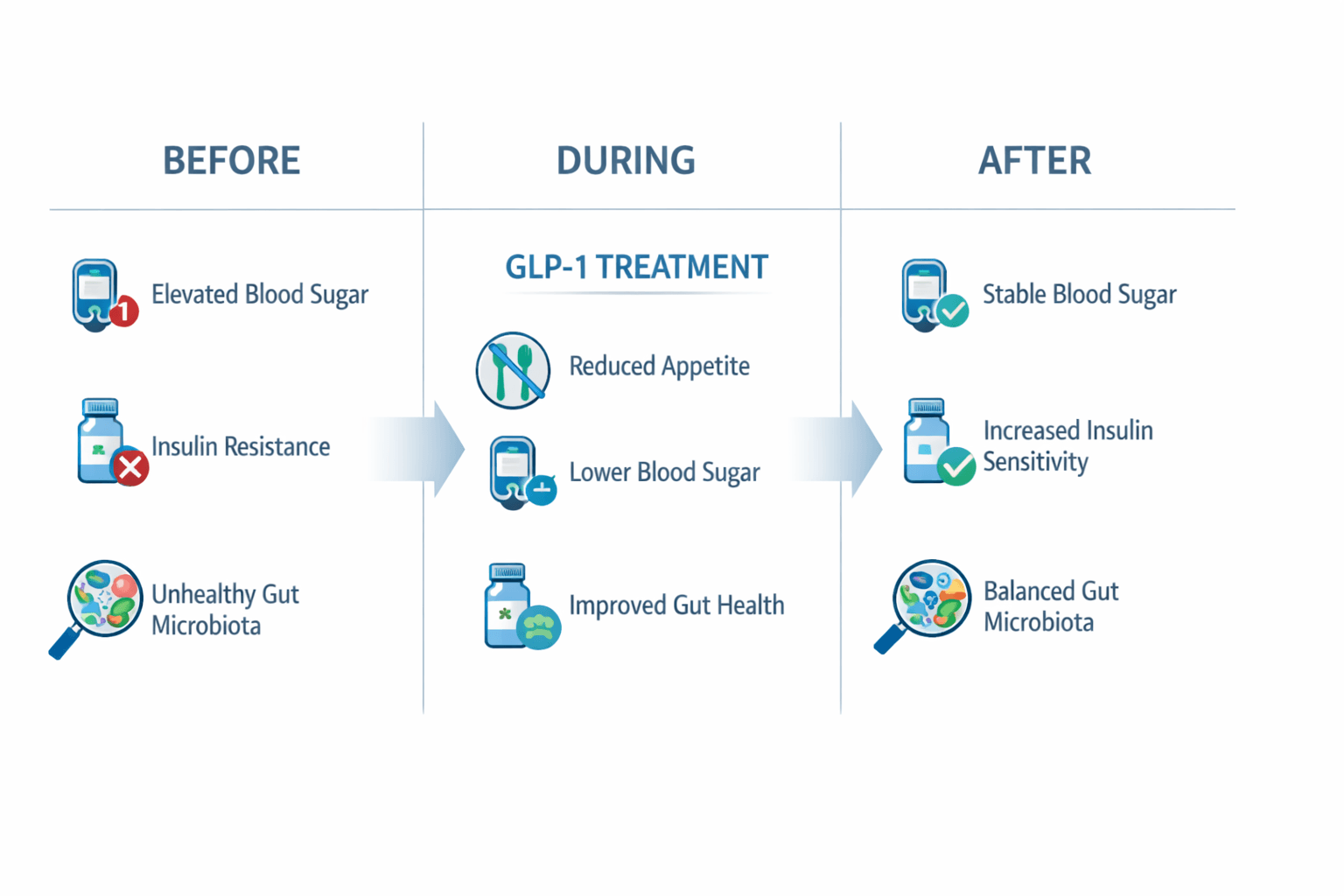
Phase 2: During Medication
The medication provides a tool: strong appetite suppression that makes weight loss easier. The question is: what do you build while the tool is active?
Many people use GLP-1 medications as a replacement for metabolic support rather than leverage for it. They lose weight, feel good, and then struggle when the medication stops because the metabolic system was never addressed.
A better approach:
- Prioritize protein (1.2–1.6 g/kg) even when appetite is low
- Train with resistance 2–3x/week to preserve or build muscle
- Avoid extreme calorie restriction: use the medication for control, not starvation
- Build sustainable habits: meal patterns, training rhythm, recovery practices
The medication provides appetite control. The habits built during treatment create the foundation for after.
Phase 3: After Medication
When GLP-1 medications stop, pharmacologic receptor activation ends. Appetite typically returns toward pre-medication patterns, but what those patterns look like depends entirely on what was built during treatment.
People who preserved muscle, improved insulin sensitivity, and established consistent meal habits often find that appetite regulation is more predictable than it was before starting medication.
People who relied entirely on pharmacologic suppression without addressing metabolic context often find that appetite returns with full intensity and weight regain becomes difficult to prevent.
The difference is not the medication. It’s the system.
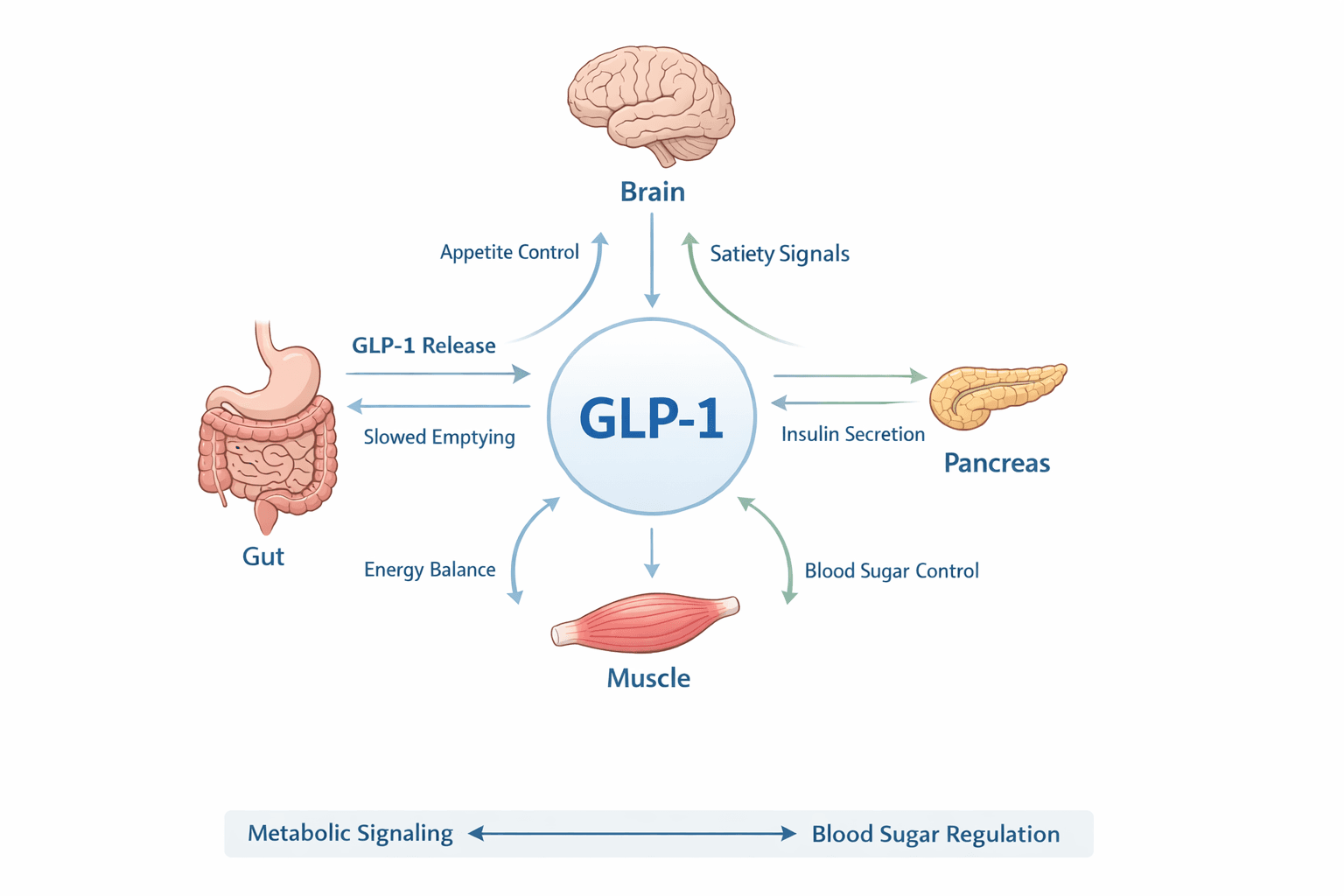
A Sustainable Long-Term Perspective
GLP-1 medications are not a cure for appetite regulation. They are a tool that provides control while in use. The durability of results depends on the metabolic environment someone builds around that control.
This is not an either-or choice between medication and lifestyle. The most effective long-term strategy uses both:
- Tools (medication) provide leverage
- Systems (muscle, insulin sensitivity, habits) create stability
Weight regain after GLP-1 therapy is not inevitable. It reflects what was or was not built during treatment — see what actually happens when you stop for the specifics, or browse the Science section.
Common Questions
Do GLP-1 medications permanently change appetite regulation?
No. When GLP-1 medication stops, pharmacologic receptor activation ends and endogenous appetite signaling returns to its prior pattern. This is why building natural GLP-1 support systems, through protein-forward nutrition, resistance training, and metabolic health strategies, during treatment is essential for sustainable weight management.
Can natural GLP-1 support replace medication for long-term weight management?
For some people, natural GLP-1 support strategies, including satiety-focused nutrition, habits that support a healthy metabolic rate, and broader lifestyle strategies, can maintain weight management results. For others, continued medication is necessary. BeyondGLP's doctor-led approach helps individuals determine the most effective long-term strategy for their metabolic health.
Why is weight regain common after stopping GLP-1 medication?
Weight regain after stopping GLP-1 medication reflects the loss of pharmacologic appetite control, not personal failure. The metabolic environment built during treatment, including muscle mass, insulin sensitivity, and natural appetite regulation habits, determines whether weight management continues successfully. BeyondGLP focuses on building this metabolic foundation for lasting results.
Scientific References
- Drucker DJ. Mechanisms of action and therapeutic application of glucagon-like peptide-1. Cell Metabolism
- Wilding JPH et al. Once-weekly semaglutide in adults with overweight or obesity. New England Journal of Medicine
- Tolhurst G et al. Short-chain fatty acids stimulate glucagon-like peptide-1 secretion. Diabetes
- Nauck MA, Meier JJ. Incretin hormones: Their role in health and disease. Diabetes, Obesity and Metabolism
Building a durable long-term strategy starts with knowing your own metabolic baseline.
Take the free BeyondGLP Metabolic Assessment →Educational content only. Information explains physiology and is not intended as medical advice. Always consult a qualified healthcare provider regarding medical decisions.