How Your Body Naturally Regulates Appetite, Blood Sugar & Weight Through GLP-1: The Endogenous System
Understanding the natural hormone system that shapes hunger, satiety, and metabolic balance, and why it matters for sustainable weight management
Written by BeyondGLP Editorial Team · Medically reviewed by Dr. Gabriel, MD
Key Takeaways
- GLP-1 is an endogenous hormone released by intestinal L-cells in response to nutrient intake. It's your body's built-in signal of fullness
- It coordinates appetite regulation, blood sugar control, and digestion through the gut-brain axis for comprehensive metabolic balance
- The strength of natural GLP-1 signaling depends on metabolic context, including muscle mass, insulin sensitivity, and gut health, not just food choices
- Supporting endogenous GLP-1 function through natural GLP-1 support creates the foundation for long-term metabolic stability and sustainable weight management

From Dr. Gabriel
When patients ask me about GLP-1, they're usually thinking about medication. But every person already has a GLP-1 system, one that responds to food, activity, and metabolic health. Understanding how this endogenous system works is the foundation for any metabolic strategy, whether it includes medication, natural GLP-1 support, or a combination of both approaches.
GLP-1 (glucagon-like peptide-1) is one of the most important hormones in metabolic regulation. It is released naturally by L-cells in the small intestine every time you eat, and it coordinates three critical functions: appetite regulation, blood sugar control, and digestive pacing.
Most public discussion about GLP-1 focuses on medications: semaglutide, tirzepatide, liraglutide. But the endogenous GLP-1 system exists in every person, and understanding how it works is essential for anyone thinking about metabolic health, whether or not they use medication.
This article explains how your body naturally produces and uses GLP-1, what influences its effectiveness, and why the endogenous system matters for long-term outcomes.
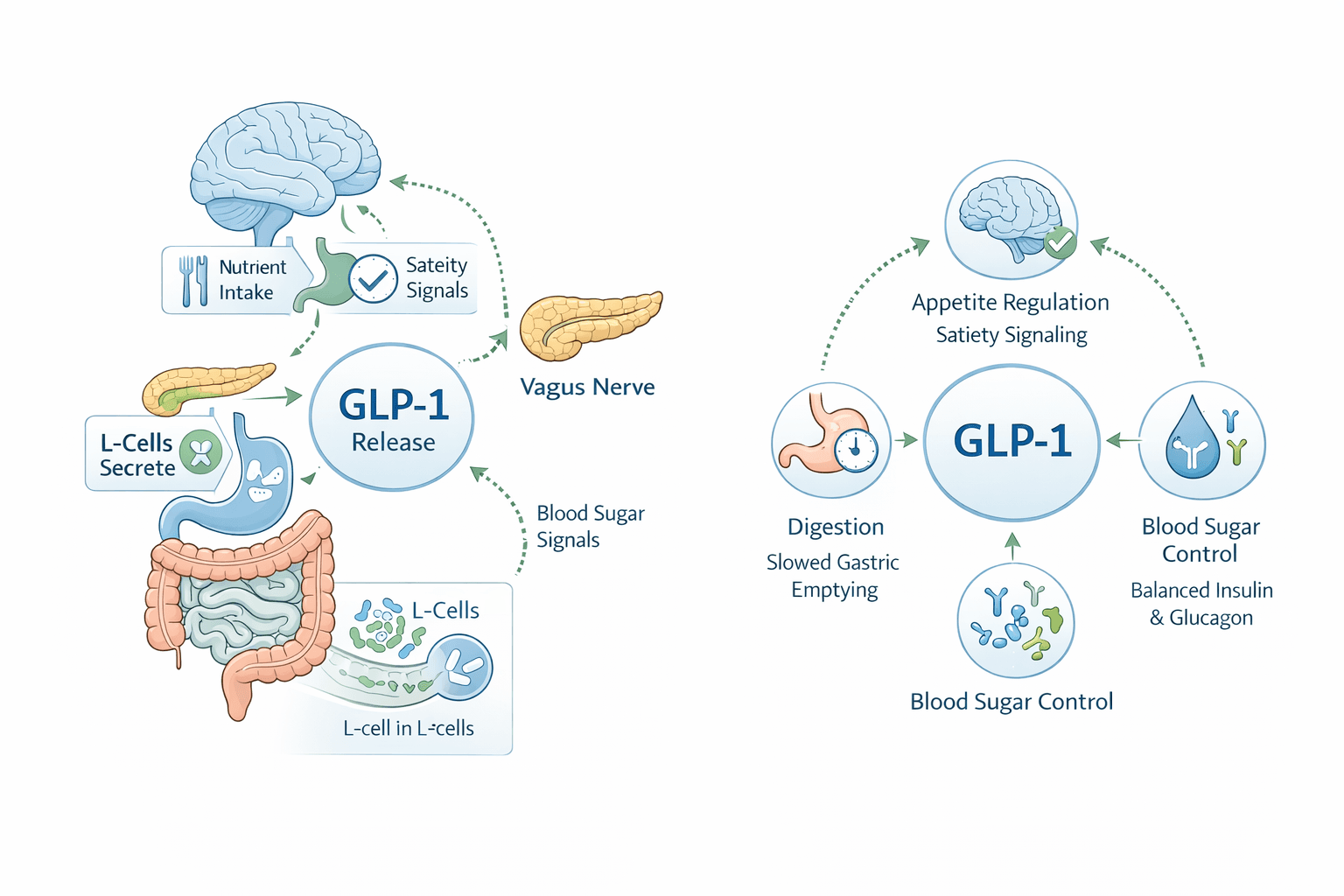
How GLP-1 Is Produced and Released
GLP-1 is secreted by specialized intestinal L-cells, primarily located in the ileum and colon. When nutrients, especially protein, fat, and fiber, reach these cells, they trigger GLP-1 release into the bloodstream.
Once released, GLP-1 acts through two primary pathways:
- Endocrine signaling: GLP-1 enters the bloodstream and reaches the pancreas, where it enhances insulin secretion and suppresses glucagon
- Vagal nerve signaling: GLP-1 activates receptors on the vagus nerve, sending satiety signals directly to the brainstem and hypothalamus
Endogenous GLP-1 has a very short half-life, approximately 2–3 minutes. It is rapidly degraded by the enzyme DPP-4. This means that natural GLP-1 signaling is pulsatile and meal-dependent, unlike pharmacologic GLP-1 which provides sustained receptor activation.
The Three Functions of Endogenous GLP-1
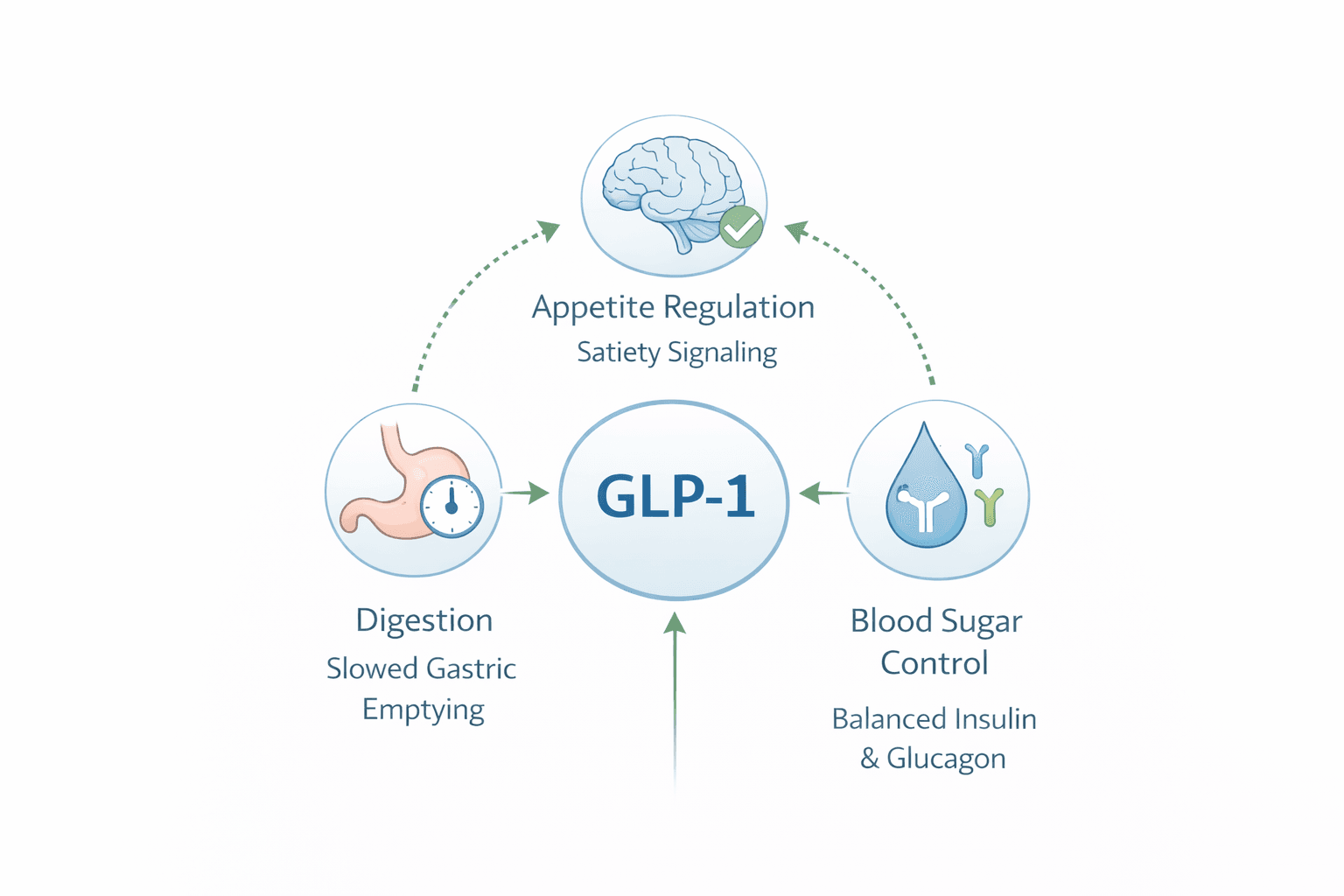
GLP-1 is not a single-purpose hormone. It coordinates three interconnected metabolic functions that together shape how the body manages energy:
1. Appetite Regulation
GLP-1 signals satiety to the brain through the gut-brain axis. After a meal, rising GLP-1 levels tell the brain that sufficient nutrients have been consumed. This reduces the drive to eat and supports the feeling of fullness between meals.
2. Blood Sugar Control
GLP-1 enhances glucose-dependent insulin secretion from the pancreas. This means insulin is released in proportion to blood sugar levels, preventing both spikes and crashes. GLP-1 also suppresses glucagon, reducing glucose output from the liver.
3. Digestive Pacing
GLP-1 slows gastric emptying, meaning food moves from the stomach to the small intestine more gradually. This prolongs satiety, smooths blood sugar responses, and allows more complete nutrient absorption.
What Influences Natural GLP-1 Effectiveness
The magnitude and effectiveness of endogenous GLP-1 signaling is not fixed. It varies based on multiple factors that together define the metabolic context:
- Meal composition: protein and fiber trigger stronger GLP-1 release than simple carbohydrates
- Gut microbiome health: short-chain fatty acids produced by beneficial bacteria stimulate L-cell GLP-1 secretion
- Insulin sensitivity: insulin resistance can blunt the downstream effects of GLP-1 signaling
- Muscle mass: muscle serves as the primary site of glucose disposal, influencing how effectively GLP-1-mediated insulin signaling translates to stable blood sugar
- Sleep and stress: cortisol and disrupted circadian rhythm alter appetite hormone sensitivity, including GLP-1 receptor responsiveness
This is why focusing solely on "boosting GLP-1" through specific foods is incomplete. The effectiveness of endogenous GLP-1 depends on the entire metabolic environment.
Why the Endogenous System Matters
Whether someone is considering GLP-1 medication, currently using it, or has never used it, the endogenous GLP-1 system is always operating. Understanding this system matters for several reasons:
- Before medication: supporting natural GLP-1 function creates the metabolic context that makes any intervention more effective
- During medication: building muscle, improving insulin sensitivity, and establishing meal patterns strengthens the system that must function independently when medication ends
- After medication: the strength of endogenous GLP-1 signaling determines how effectively appetite and blood sugar are regulated without pharmacologic support
- Without medication: for people who choose not to use GLP-1 drugs, optimizing the endogenous system is the primary strategy for metabolic health
GLP-1 medications provide pharmacologic leverage. The endogenous system provides the foundation. Long-term metabolic stability depends on both — see how to support that system directly, or browse our Science archive for more.
Common Questions
Does everyone produce GLP-1 naturally for appetite regulation?
Yes. GLP-1 is produced by intestinal L-cells in every person in response to food intake, signaling fullness to the brain. The amount and effectiveness of release varies based on meal composition, gut microbiome health, insulin sensitivity, and overall metabolic context.
Can I permanently increase my natural GLP-1 levels for weight management?
GLP-1 is released in response to meals, not produced continuously at high levels. You can enhance post-meal release through protein-forward nutrition, fiber intake, and metabolic health strategies, but you cannot permanently elevate baseline levels. These natural GLP-1 support strategies focus on optimizing the system in which GLP-1 functions.
How is natural GLP-1 different from GLP-1 medications for weight loss?
Natural GLP-1 is pulsatile, meal-dependent, and rapidly degraded (half-life of 2-3 minutes). GLP-1 medications provide sustained, pharmacologic receptor activation that lasts days to weeks. Both activate the same receptors, but at very different intensities and durations. Understanding both is essential for sustainable weight management.
Why is understanding the endogenous GLP-1 system important for people on medication?
Understanding your body's natural GLP-1 system is critical because GLP-1 medications work alongside, not instead of, your endogenous metabolic signaling. Supporting natural GLP-1 function through nutrition, exercise, and metabolic health strategies builds the foundation that determines long-term weight management success, whether on or off medication.
Scientific References
- Drucker DJ. Mechanisms of action and therapeutic application of glucagon-like peptide-1. Cell Metabolism
- Holst JJ. The physiology of glucagon-like peptide 1. Physiological Reviews
- Tolhurst G et al. Short-chain fatty acids stimulate glucagon-like peptide-1 secretion. Diabetes
- Nauck MA, Meier JJ. Incretin hormones: Their role in health and disease. Diabetes, Obesity and Metabolism
See how well your own endogenous GLP-1 system is functioning right now.
Take the free BeyondGLP Metabolic Assessment →Educational content only. Information explains physiology and is not intended as medical advice. Always consult a qualified healthcare provider regarding medical decisions.